Description
PEG-MGF Peptide Overview
https://pubmed.ncbi.nlm.nih.gov/
PEG-MGF Peptide is a PEGylated analogue of Mechano Growth Factor (MGF), a splice variant of Insulin-Like Growth Factor-1 (IGF-1) that has attracted significant scientific interest because of its role in cellular signaling and tissue adaptation research. The addition of polyethylene glycol (PEG) is intended to increase molecular stability and extend the peptide’s persistence in experimental settings, making it useful for laboratory studies that require longer observation periods.
In scientific research, PEG-MGF Peptide is commonly investigated to better understand growth factor signaling, protein interactions, cellular communication, and the molecular pathways associated with skeletal muscle biology and tissue remodeling. Researchers also use this peptide to explore how growth factor signaling responds to different experimental conditions and how cellular pathways are regulated over time.
Because PEGylation modifies the peptide’s pharmacokinetic properties compared with native MGF, PEG-MGF has become an important research model for evaluating peptide stability, molecular behavior, and prolonged receptor exposure in controlled laboratory environments. Its unique characteristics continue to make it a valuable compound in molecular biology, peptide pharmacology, regenerative biology research, and experimental biotechnology.
Manufactured exclusively for research applications, our PEG-MGF Peptide is produced using advanced peptide synthesis and purification methods to ensure high purity, excellent stability, and consistent batch-to-batch performance. Each production lot undergoes comprehensive analytical verification to support reliable and reproducible scientific investigations.
How PEG-MGF Peptide Works
PEG-MGF Peptide is designed to provide researchers with a model for studying the biological activity of Mechano Growth Factor while benefiting from the enhanced stability associated with PEGylation. In laboratory settings, researchers investigate its interactions with cellular signaling pathways related to insulin-like growth factor biology and examine how prolonged peptide availability may influence experimental outcomes.
Scientific studies commonly use PEG-MGF Peptide to explore growth factor signaling networks, intracellular communication, protein expression, and cellular adaptation under controlled laboratory conditions. Its extended stability compared with non-PEGylated MGF makes it useful for experiments evaluating peptide persistence and signaling duration.
As research into IGF-1 splice variants continues to evolve, PEG-MGF Peptide remains an important experimental tool for investigating molecular biology, growth factor regulation, tissue biology, and peptide pharmacology. Its well-characterized research profile and analytical quality make it a dependable choice for laboratories seeking consistent and reproducible results.
Research Applications of PEG-MGF Peptide
PEG-MGF Peptide is widely studied in laboratory research because of its relationship with Mechano Growth Factor (MGF), an IGF-1 splice variant involved in cellular signaling and tissue adaptation pathways. Its PEGylated structure provides researchers with a valuable model for investigating peptide stability, molecular interactions, and growth factor signaling mechanisms.
Researchers commonly investigate PEG-MGF Peptide in areas including:
• IGF-1 signaling pathway research
• Growth factor receptor interactions
• Skeletal muscle biology studies
• Cellular communication mechanisms
• Protein expression research
• Tissue biology investigations
• Molecular signaling pathways
• Peptide stability studies
• Growth factor regulation research
• Regenerative biology models
• Biotechnology research
• Experimental cellular adaptation studies
The unique properties of PEG-MGF Peptide allow researchers to evaluate how modified peptide structures behave in controlled laboratory environments and contribute to a better understanding of growth factor-related biological processes.
Research-Grade Manufacturing & Quality Assurance
At PeptideAminoNation, we prioritize quality, consistency, and analytical transparency to provide researchers with dependable laboratory peptides.
PEG-MGF Peptide is manufactured using advanced peptide production methods and carefully controlled purification processes. Each batch is evaluated to help ensure researchers receive a product suitable for scientific investigation.
Quality Control Procedures
Every batch undergoes analytical verification, including:
• High-Performance Liquid Chromatography (HPLC)
• Mass Spectrometry (MS)
• Identity confirmation
• Purity assessment
• Batch consistency evaluation
• Quality control review
• Analytical documentation
Certificates of Analysis (COA), HPLC chromatograms, and supporting analytical information are available upon request to help researchers verify product quality.
Laboratory Handling & Reconstitution
Proper handling procedures are important for maintaining peptide stability and supporting reliable laboratory results.
Recommended Reconstitution
PEG-MGF Peptide may be prepared using appropriate laboratory-grade solvents, including:
• Bacteriostatic Water
• Sterile Water for Injection
Researchers should allow the lyophilized powder to dissolve naturally by gently swirling the vial. Avoid vigorous shaking, as excessive mechanical stress may affect peptide integrity.
All preparation procedures should be performed using appropriate laboratory techniques to maintain sample quality.
Storage Recommendations
Correct storage conditions help maintain PEG-MGF Peptide quality throughout laboratory use.
Lyophilized Powder
• Store at -20°C for long-term preservation.
• Keep the product protected from moisture, heat, and excessive light exposure.
After Reconstitution
• Store refrigerated between 2°C and 8°C.
• Protect prepared solutions from direct light.
• Minimize repeated freeze-thaw cycles.
• Follow appropriate laboratory storage protocols.
Proper storage practices support peptide stability and help researchers maintain consistent experimental performance.
Product Specifications
General Information
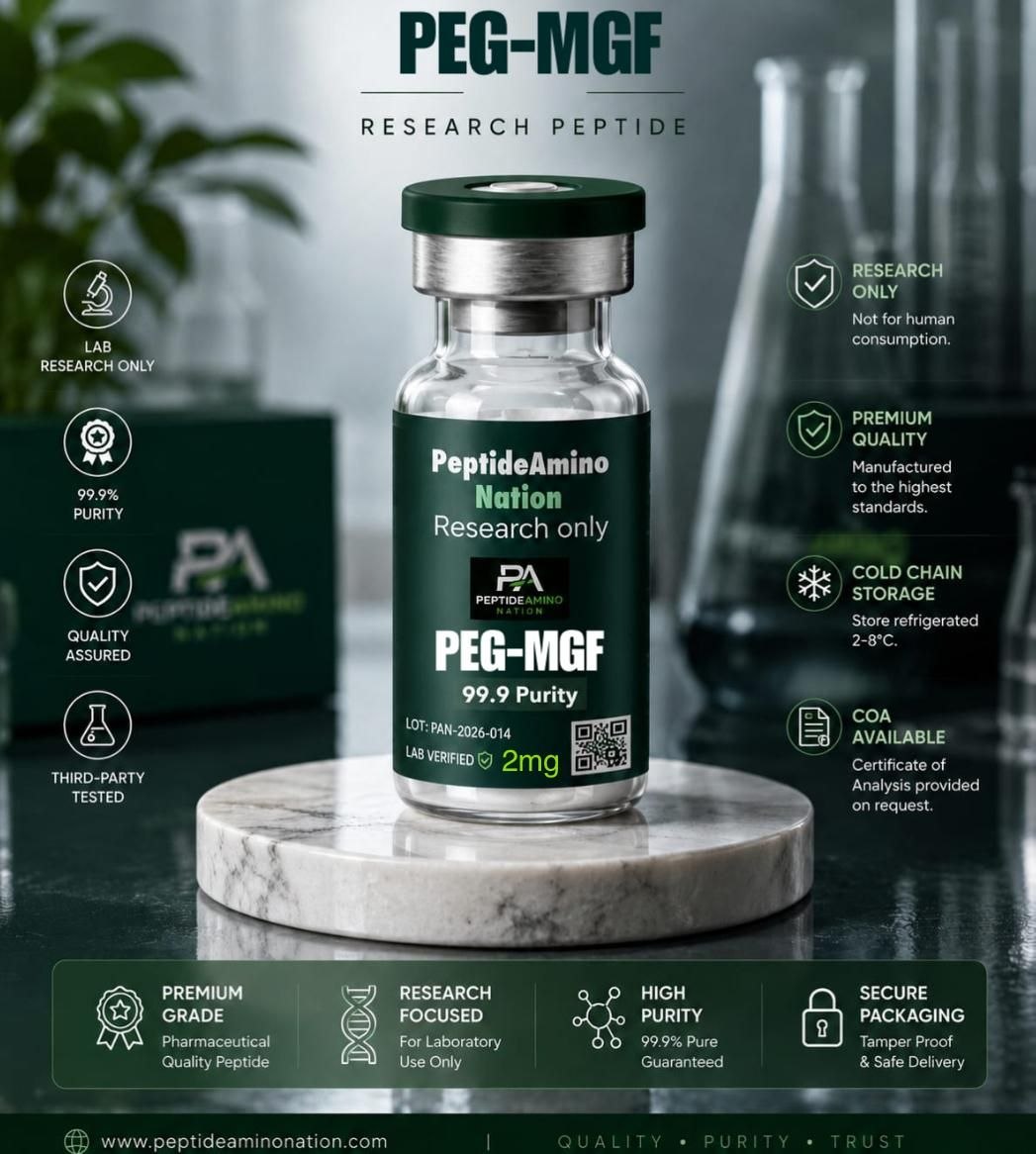
Product Name: PEG-MGF Peptide
Peptide Classification: PEGylated Growth Factor Research Peptide
Related Molecule: Mechano Growth Factor (MGF) / IGF-1 Variant
Physical Appearance: White lyophilized powder
Grade: Research Grade
Primary Research Area: Growth Factor & Cellular Signaling Research
Quality Specifications
Purity: ≥98% (HPLC Verified)
Analytical Methods: HPLC & Mass Spectrometry
Manufacturing Standard: Quality-controlled research production
Documentation: Certificate of Analysis (COA) available upon request
Research Classification: Laboratory Research Use Only
Why Researchers Choose PEG-MGF Peptide
PEG-MGF Peptide provides researchers with a valuable experimental model for studying modified growth factor peptides and their interactions with cellular signaling pathways.
Researchers choose PEG-MGF Peptide because of:
• High analytical purity
• Reliable quality verification
• PEGylated peptide stability characteristics
• Consistent batch performance
• Extensive relevance in growth factor research
• Suitability for molecular biology investigations
• Professional research-grade manufacturing standards
These characteristics make PEG-MGF Peptide a useful research tool for laboratories studying peptide chemistry, growth factor signaling, cellular communication, and experimental biotechnology.
Why Choose PeptideAminoNation?
At PeptideAminoNation, we are dedicated to providing researchers with high-quality laboratory peptides supported by strict quality standards, analytical verification, and transparent product information.
Scientific research depends on reliable materials, and our approach focuses on delivering peptides with consistent quality, proper documentation, and dependable performance. Each batch of PEG-MGF Peptide is carefully evaluated to support researchers working in molecular biology, cellular signaling, growth factor studies, and biotechnology research.
Researchers choose PeptideAminoNation because we provide:
• Research-grade peptide quality
• High-purity manufacturing standards
• HPLC and Mass Spectrometry verification
• Consistent batch-to-batch performance
• Secure packaging designed for peptide stability
• Analytical documentation upon request
• Professional customer support
• Research-focused product information
Our goal is to support scientists by providing dependable research materials that contribute to accurate and reproducible laboratory investigations.
Technical Overview of PEG-MGF Peptide
PEG-MGF Peptide is a modified research peptide based on Mechano Growth Factor (MGF), an IGF-1 splice variant studied for its involvement in cellular signaling and growth factor biology.
The addition of polyethylene glycol (PEG) creates a modified peptide structure that researchers examine for changes in molecular stability, peptide behavior, and experimental longevity. This makes PEG-MGF an important research model for investigating how peptide modification can influence characteristics such as molecular interactions and stability under laboratory conditions.
In research environments, PEG-MGF Peptide is investigated in areas including:
• Growth factor signaling pathways
• IGF-related molecular research
• Cellular communication
• Protein interaction studies
• Peptide modification research
• Tissue biology investigations
• Molecular biotechnology
By providing researchers with a stable peptide model, PEG-MGF contributes to broader scientific understanding of growth factor regulation and peptide engineering.
Research Use Only
Research Use Only
PEG-MGF Peptide is supplied exclusively for laboratory research and scientific investigation.
This product is not intended for human consumption, therapeutic applications, veterinary use, diagnostic procedures, or clinical purposes. It should only be handled by qualified researchers in suitable laboratory environments following applicable safety guidelines and regulations.
Related Research Resources
Continue your research journey with our educational resources and complementary laboratory materials. These guides provide additional information about peptide quality, handling, storage, and analytical testing.
Why Impurities Form During Peptide Synthesis: 7 Critical Mistakes Every Researcher Must Avoid
Common Storage Mistakes That Reduce Peptide Quality:
Why Different Peptides Have Different Shelf Lives
How Laboratories Test Peptide Identity: 6 Powerful Methods That Protect You From Costly Mistakes.
Understanding Syringe Units for Peptide Research Calculations
The Role of pH in Peptide Solubility:
Understanding Peptide Hydrophobicity: 9 Powerful Insights That Prevent Costly Research Failures.
Peptide Purity Above 99% isn’t always the best choice for peptide research.
Frequently Asked Questions (FAQ)
What is PEG-MGF Peptide?
PEG-MGF Peptide is a PEGylated research peptide based on Mechano Growth Factor (MGF), an IGF-1 splice variant studied for its role in growth factor signaling, cellular communication, and molecular biology research.
The PEGylated structure allows researchers to investigate peptide stability, molecular interactions, and growth factor-related pathways under controlled laboratory conditions.
What is PEG-MGF Peptide used for in research?
Researchers use PEG-MGF Peptide to investigate areas related to growth factor biology and cellular signaling, including:
• IGF-1 signaling pathways
• Growth factor interactions
• Peptide stability studies
• Cellular communication mechanisms
• Protein expression research
• Molecular biology investigations
• Tissue biology research
• Biotechnology applications
It serves as a valuable research model for studying how modified peptides behave in laboratory environments.
What makes PEG-MGF Peptide different from MGF Peptide?
The primary difference is the addition of a polyethylene glycol (PEG) group to the peptide structure. PEGylation is a modification researchers study because it can influence peptide characteristics such as molecular behavior, stability, and experimental performance.
This makes PEG-MGF Peptide a useful tool for research comparing modified and non-modified peptide structures.
How does PEG-MGF Peptide work in laboratory research?
PEG-MGF Peptide is investigated as a model for studying Mechano Growth Factor-related signaling pathways. Researchers examine its interactions with cellular systems, protein networks, and growth factor mechanisms to better understand peptide biology and molecular communication.
What is the purity of your PEG-MGF Peptide?
Our PEG-MGF Peptide is produced according to strict quality standards and undergoes analytical testing using High-Performance Liquid Chromatography (HPLC) and Mass Spectrometry (MS) to verify identity, purity, and consistency.
Certificates of Analysis (COA) and analytical documentation are available upon request.
How is PEG-MGF Peptide supplied?
PEG-MGF Peptide is supplied as a sterile, white lyophilized powder. The freeze-dried format helps support peptide stability during storage and transportation while allowing researchers to prepare samples according to their laboratory protocols.
How should PEG-MGF Peptide be stored?
For long-term storage, PEG-MGF Peptide should be stored at -20°C in a dry and protected environment.
After preparation, researchers should follow appropriate laboratory storage practices, including refrigeration, protection from light, and minimizing repeated freeze-thaw cycles.
How should PEG-MGF Peptide be reconstituted?
Researchers typically prepare PEG-MGF Peptide using appropriate laboratory-grade solvents, such as Bacteriostatic Water or Sterile Water for Injection.
The vial should be gently swirled until the peptide is dissolved. Vigorous shaking should be avoided to help maintain peptide integrity.
Why is HPLC testing important for PEG-MGF Peptide?
High-Performance Liquid Chromatography (HPLC) is an important analytical method used to evaluate peptide purity and consistency.
HPLC testing helps researchers verify that the peptide meets quality standards and supports confidence in experimental reproducibility.
Is a Certificate of Analysis (COA) available for PEG-MGF Peptide?
Yes. Certificates of Analysis (COA), HPLC chromatograms, and supporting analytical information may be available upon request.
These documents provide researchers with important quality verification information, including peptide identity and analytical testing results.
Is PEG-MGF Peptide intended for human use?
No. PEG-MGF Peptide is supplied strictly for laboratory research use only.
It is not intended for human consumption, therapeutic applications, diagnostic procedures, veterinary use, or clinical purposes.
Why choose PeptideAminoNation for PEG-MGF Peptide?
Researchers choose PeptideAminoNation because we focus on providing quality research peptides supported by analytical verification, reliable manufacturing standards, secure packaging, and professional customer support.
Our goal is to provide dependable research materials for scientists studying peptide chemistry, growth factor biology, and cellular signaling pathways.
What other research resources are useful with PEG-MGF Peptide?
Researchers may benefit from additional educational resources covering:
• Peptide storage and stability
• HPLC testing methods
• Certificate of Analysis interpretation
• Research peptide handling practices
• Growth factor signaling concepts
• Laboratory peptide quality control
These resources help researchers improve their understanding of peptide research methods and best laboratory practices.
Read Related Topics To Boost Your Knowledge on Peptide
Light Exposure vs Peptide Stability: 9 Powerful Truths to Prevent Costly Research Failures
Peptide Purity Above 99% isn’t always the best choice for peptide research
Understanding Peptide Hydrophobicity: 9 Powerful Insights That Prevent Costly Research Failures.
The Role of pH in Peptide Solubility:
Understanding Syringe Units for Peptide Research Calculations:
How Laboratories Test Peptide Identity: 6 Powerful Methods That Protect You From Costly Mistakes.
Reviews
There are no reviews yet.