Description
IGF-1 LR3 Peptide Overview
https://pubmed.ncbi.nlm.nih.gov/
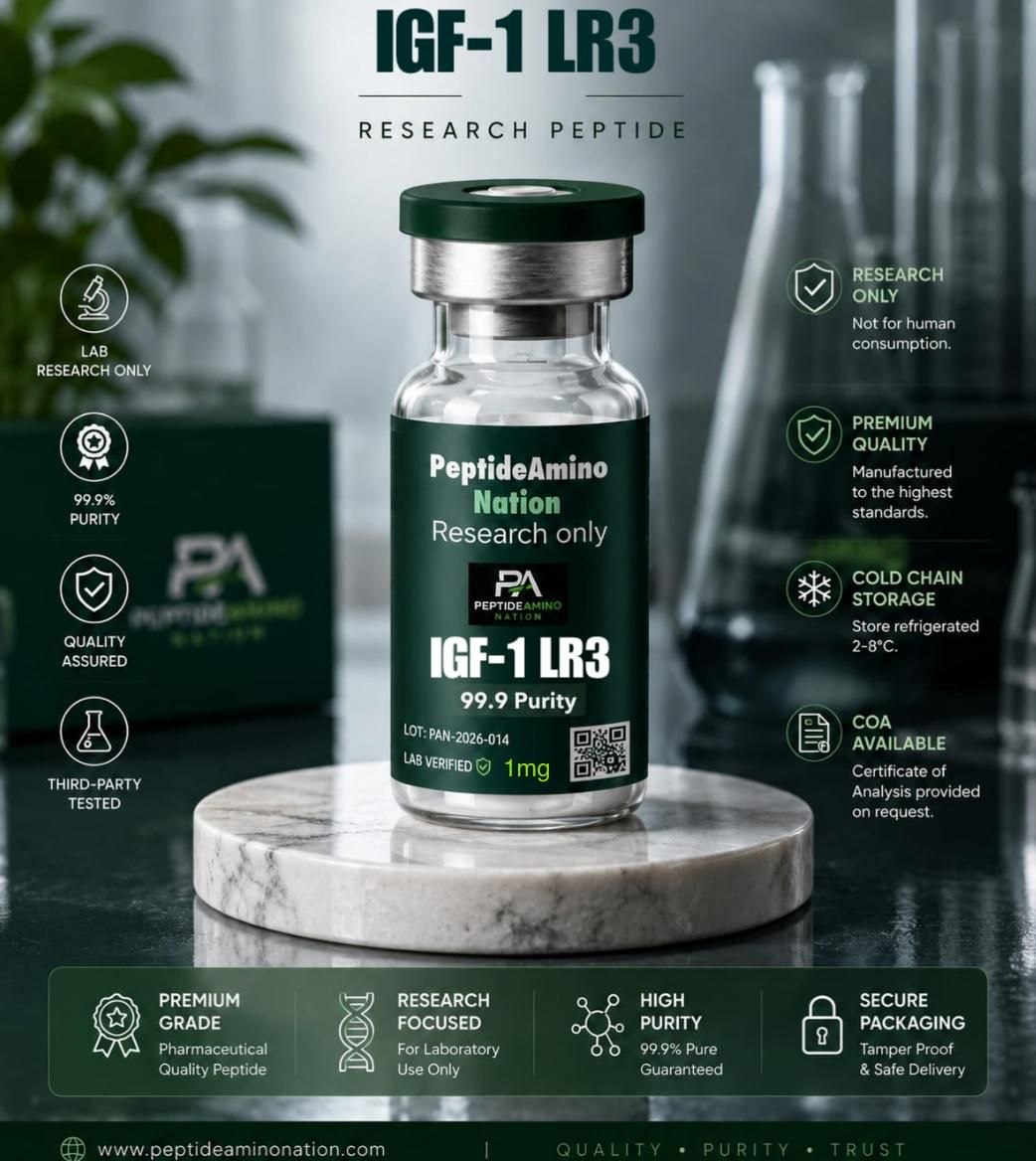
IGF-1 LR3 Peptide is a long-acting analogue of Insulin-Like Growth Factor-1 (IGF-1) that has become an important research tool in molecular biology, cellular signaling, and growth factor investigations. The peptide contains structural modifications that distinguish it from native IGF-1, enabling researchers to study how these changes influence receptor interactions, peptide stability, and biological activity under controlled laboratory conditions.
Within scientific research, IGF-1 LR3 Peptide is widely investigated for its interaction with the Insulin-Like Growth Factor-1 Receptor (IGF-1R) and its role in intracellular signaling pathways. Researchers use this peptide to explore cellular communication, growth factor regulation, protein synthesis mechanisms, and the molecular processes involved in cell biology and tissue research.
The extended biological stability of IGF-1 LR3 compared with native IGF-1 has made it particularly valuable in experimental models requiring prolonged observation of growth factor signaling. This characteristic allows laboratories to investigate receptor activation, downstream signaling networks, and peptide-receptor interactions with greater experimental flexibility.
Manufactured exclusively for laboratory research, our IGF-1 LR3 Peptide is produced using advanced peptide synthesis technologies and stringent purification procedures to deliver exceptional purity, stability, and batch-to-batch consistency. Every production lot undergoes comprehensive analytical testing to support reliable and reproducible scientific investigations.
How IGF-1 LR3 Peptide Works
IGF-1 LR3 Peptide functions by interacting with the Insulin-Like Growth Factor-1 Receptor (IGF-1R), initiating intracellular signaling pathways that researchers study to better understand growth factor biology and cellular regulation.
In laboratory environments, scientists investigate IGF-1 LR3 Peptide to examine receptor activation, signal transduction, protein expression, cellular proliferation mechanisms, and molecular communication. Because of its modified structure and prolonged biological stability, IGF-1 LR3 serves as a valuable experimental model for evaluating growth factor activity over extended research periods.
Researchers also use IGF-1 LR3 Peptide to investigate peptide-receptor binding characteristics, molecular endocrinology, biotechnology applications, and the biological effects of modified insulin-like growth factors. Its well-documented research profile has established IGF-1 LR3 as one of the most widely studied growth factor peptides in modern laboratory science.
Research Applications of IGF-1 LR3 Peptide
IGF-1 LR3 Peptide is one of the most extensively studied growth factor research peptides because of its interaction with the Insulin-Like Growth Factor-1 Receptor (IGF-1R) and its prolonged biological stability compared with native IGF-1. These characteristics make it an important research tool for laboratories investigating growth factor biology, receptor signaling, and molecular endocrinology.
Researchers commonly investigate IGF-1 LR3 Peptide in laboratory studies involving:
• Insulin-Like Growth Factor-1 (IGF-1) signaling pathways
• IGF-1 receptor (IGF-1R) activation
• Growth factor biology
• Cellular communication and signal transduction
• Protein expression research
• Cell proliferation and differentiation studies
• Molecular endocrinology
• Tissue biology investigations
• Peptide-receptor interaction studies
• Biotechnology research
• Experimental metabolic biology
• Regenerative biology models
• Cellular adaptation research
• Experimental animal models
Its well-characterized molecular profile allows researchers to investigate complex biological pathways while supporting reproducible laboratory investigations.
Research-Grade Manufacturing & Quality Assurance
At PeptideAminoNation, every batch of IGF-1 LR3 Peptide is produced using advanced peptide synthesis technologies and carefully controlled purification methods to ensure exceptional purity, consistency, and analytical reliability.
Each production batch undergoes comprehensive quality control testing before release, providing researchers with confidence in the identity and quality of every peptide supplied.
Quality Control Procedures
Every batch is evaluated using advanced analytical techniques, including:
• High-Performance Liquid Chromatography (HPLC)
• Mass Spectrometry (MS)
• Identity verification
Purity confirmation
• Batch-to-batch consistency testing
• Sterility monitoring
• Endotoxin screening
Certificates of Analysis (COA), HPLC chromatograms, and supporting analytical reports are available upon request to provide additional quality assurance for laboratory research.
Laboratory Handling & Reconstitution
Proper laboratory handling is essential for maintaining peptide integrity and achieving consistent experimental results.
Recommended Reconstitution
Researchers commonly prepare IGF-1 LR3 Peptide using:
• Bacteriostatic Water
• Sterile Water for Injection
Add the diluent slowly and gently swirl the vial until the lyophilized powder has completely dissolved. Avoid vigorous shaking or excessive agitation, as these practices may contribute to peptide degradation.
All peptide preparation should be performed using appropriate sterile laboratory techniques.
Storage Recommendations
Correct storage conditions help preserve peptide stability and support long-term research reliability.
Lyophilized Powder
• Store at -20°C for long-term preservation.
• Protect from excessive heat, moisture, and direct sunlight.
• Short-term exposure to room temperature during shipping is generally acceptable when properly packaged.
After Reconstitution
• Store refrigerated between 2°C and 8°C.
• Protect the solution from prolonged light exposure.
• Avoid repeated freeze-thaw cycles.
• Prepare only the quantity required for ongoing laboratory studies whenever practical.
Following these recommendations helps maintain peptide quality throughout experimental use.
Product Specifications
General Information
Product Name: IGF-1 LR3 Peptide
Peptide Classification: Long-Acting Insulin-Like Growth Factor Analogue
Primary Target: Insulin-Like Growth Factor-1 Receptor (IGF-1R)
Physical Appearance: White sterile lyophilized powder
Grade: Research Grade
Primary Research Area: Growth Factor & Cellular Signaling Research
Quality Specifications
Purity: ≥98% (HPLC Verified)
Analytical Methods: High-Performance Liquid Chromatography (HPLC) & Mass Spectrometry (MS)
Manufacturing Standard: Research-grade quality-controlled production
Documentation: Certificate of Analysis (COA) available upon request
Research Classification: Laboratory Research Use Only
Why Researchers Choose IGF-1 LR3 Peptide
https://www.ncbi.nlm.nih.gov/
IGF-1 LR3 Peptide is widely recognized within the scientific community because of its extensive documentation, consistent biological profile, and importance in growth factor research.
Researchers choose IGF-1 LR3 Peptide because it offers:
• High analytical purity
• Reliable batch-to-batch consistency
• Comprehensive analytical verification
• Stable lyophilized formulation
• Extensive scientific literature supporting research applications
• Broad use across molecular biology and growth factor studies
• Professional research-grade manufacturing standards
• Excellent reproducibility for laboratory investigations
These characteristics make IGF-1 LR3 Peptide an important research tool for laboratories studying growth factor signaling, receptor biology, peptide pharmacology, and cellular communication.
Why Choose PeptideAminoNation?
At PeptideAminoNation, we understand that high-quality research begins with high-quality materials. That is why every batch of IGF-1 LR3 Peptide is manufactured using stringent quality control procedures and verified through advanced analytical testing before being released for laboratory research.
Our commitment to quality, transparency, and scientific integrity allows researchers to purchase with confidence, knowing that each peptide is supported by rigorous testing and consistent manufacturing standards.
When you choose IGF-1 LR3 Peptide from PeptideAminoNation, you benefit from:
• Premium research-grade manufacturing
• High purity verified by HPLC and Mass Spectrometry
• Consistent batch-to-batch quality
• Sterile lyophilized peptide formulation
• Secure packaging for maximum product stability
• Certificate of Analysis (COA) available upon request
• Reliable customer support
• Fast and secure worldwide shipping
• Educational resources to support peptide research
Our mission is to provide researchers with dependable peptide products that help support accurate, reproducible, and high-quality scientific investigations.
Technical Overview of IGF-1 LR3 Peptide
IGF-1 LR3 Peptide is a modified analogue of Insulin-Like Growth Factor-1 (IGF-1) engineered with structural changes that increase its stability and reduce its affinity for insulin-like growth factor binding proteins (IGFBPs). These characteristics have made it one of the most extensively studied growth factor peptides in laboratory research.
Scientists investigate IGF-1 LR3 Peptide to better understand:
• Growth factor receptor activation
• Intracellular signaling pathways
• Cell signaling networks
• Protein synthesis regulation
• Cellular proliferation and differentiation
• Peptide-receptor interactions
• Molecular endocrinology
• Experimental biotechnology
• Tissue biology research
Its well-documented molecular characteristics make IGF-1 LR3 Peptide a valuable experimental model for studying insulin-like growth factor biology, receptor-mediated signaling, and growth factor regulation under controlled laboratory conditions.
Research Use Only
Research Use Only
IGF-1 LR3 Peptide is supplied exclusively for laboratory research and scientific investigation.
This product is not intended for human consumption, therapeutic use, medical treatment, veterinary use, diagnostic procedures, or clinical applications. It should only be handled by qualified professionals using appropriate laboratory equipment and safety procedures.
Related Research Resources
Expand your knowledge with our educational guides and complementary research products designed to support peptide research and laboratory best practices.
Peptide Degradation Signs: 7 Critical Warnings Researchers Should Never Ignore
How to Calculate Peptide Molarity: 10 Powerful Steps for Accurate Research Success
Why Researchers Use Bacteriostatic Water: 9 Proven Reasons Every Laboratory Should Know
Understanding Peptide Oxidation: 15 Powerful Ways to Prevent Costly Peptide Degradation
Understanding Retention Time in Peptide HPLC
Frequently Asked Questions (FAQ)
What is IGF-1 LR3 Peptide?
IGF-1 LR3 Peptide is a modified analogue of Insulin-Like Growth Factor-1 (IGF-1) developed for laboratory research. Researchers study its interaction with the Insulin-Like Growth Factor-1 Receptor (IGF-1R) to investigate growth factor signaling, cellular communication, molecular biology, and receptor-mediated pathways.
Its structural modifications provide researchers with a valuable model for studying peptide stability and prolonged biological activity under controlled laboratory conditions.
What is IGF-1 LR3 Peptide used for in research?
Researchers commonly use IGF-1 LR3 Peptide to investigate:
• IGF-1 receptor (IGF-1R) signaling
• Growth factor biology
• Cellular signaling pathways
• Protein expression
• Cell proliferation and differentiation
• Molecular endocrinology
• Tissue biology
• Peptide-receptor interactions
• Experimental biotechnology
• Laboratory animal research models
Its extensive scientific literature has made IGF-1 LR3 one of the most widely researched growth factor peptides available for laboratory investigations.
How does IGF-1 LR3 Peptide work?
IGF-1 LR3 Peptide is investigated for its interaction with the Insulin-Like Growth Factor-1 Receptor (IGF-1R). Activation of this receptor initiates intracellular signaling pathways that researchers study to better understand cellular communication, protein regulation, and molecular responses.
These studies contribute to scientific knowledge of growth factor biology and receptor-mediated signaling.
What makes IGF-1 LR3 Peptide different from native IGF-1?
IGF-1 LR3 Peptide contains structural modifications that distinguish it from native IGF-1. Researchers investigate these modifications because they influence peptide stability and interactions with insulin-like growth factor binding proteins (IGFBPs), making IGF-1 LR3 useful for specific experimental applications.
What is the purity of your IGF-1 LR3 Peptide?
Our IGF-1 LR3 Peptide is manufactured under strict quality standards and undergoes analytical testing using High-Performance Liquid Chromatography (HPLC) and Mass Spectrometry (MS) to verify identity, purity, and batch consistency.
Certificates of Analysis (COA) are available upon request.
How is IGF-1 LR3 Peptide supplied?
IGF-1 LR3 Peptide is supplied as a sterile white lyophilized powder. The lyophilized formulation supports stability during shipping, storage, and laboratory preparation.
How should IGF-1 LR3 Peptide be reconstituted?
Researchers typically reconstitute IGF-1 LR3 Peptide using laboratory-grade Bacteriostatic Water or Sterile Water for Injection.
Allow the peptide to dissolve naturally by gently swirling the vial. Avoid vigorous shaking, which may affect peptide stability.
How should IGF-1 LR3 Peptide be stored?
For long-term storage, keep the lyophilized peptide at -20°C.
After reconstitution:
• Store at 2°C to 8°C
• Protect from direct light
• Avoid repeated freeze-thaw cycles
• Follow established laboratory storage procedures
These recommendations help maintain peptide integrity for research applications.
Is a Certificate of Analysis (COA) available?
Yes. Certificates of Analysis (COA), including HPLC chromatograms and supporting analytical documentation, are available upon request to verify product identity, purity, and quality.
Why is HPLC testing important for IGF-1 LR3 Peptide?
HPLC is an essential analytical technique used to evaluate peptide purity and batch consistency.
For research laboratories, HPLC verification helps confirm that IGF-1 LR3 Peptide meets quality standards and supports reliable, reproducible experimental results.
Is IGF-1 LR3 Peptide intended for human use?
No. IGF-1 LR3 Peptide is supplied strictly for laboratory research purposes only.
It is not intended for human consumption, therapeutic applications, diagnostic procedures, veterinary use, or clinical use.
Why choose PeptideAminoNation for IGF-1 LR3 Peptide?
Researchers choose PeptideAminoNation because we are committed to providing premium research peptides supported by:
• High-purity manufacturing
• HPLC and Mass Spectrometry verification
• Consistent batch quality
• Secure packaging
• Certificates of Analysis (COA)
• Research-focused customer support
• Transparent quality standards
Our commitment is to supply reliable research materials that support high-quality scientific investigations.
What other research resources are recommended alongside IGF-1 LR3 Peptide?
Researchers often benefit from educational resources covering:
• Peptide reconstitution techniques
• Peptide storage and stability
• Understanding HPLC testing
• How to interpret a Certificate of Analysis (COA)
• Growth factor signaling pathways
• Research peptide quality control
These resources help support proper laboratory handling and improve understanding of peptide research methodologies.
Reviews
There are no reviews yet.