Description
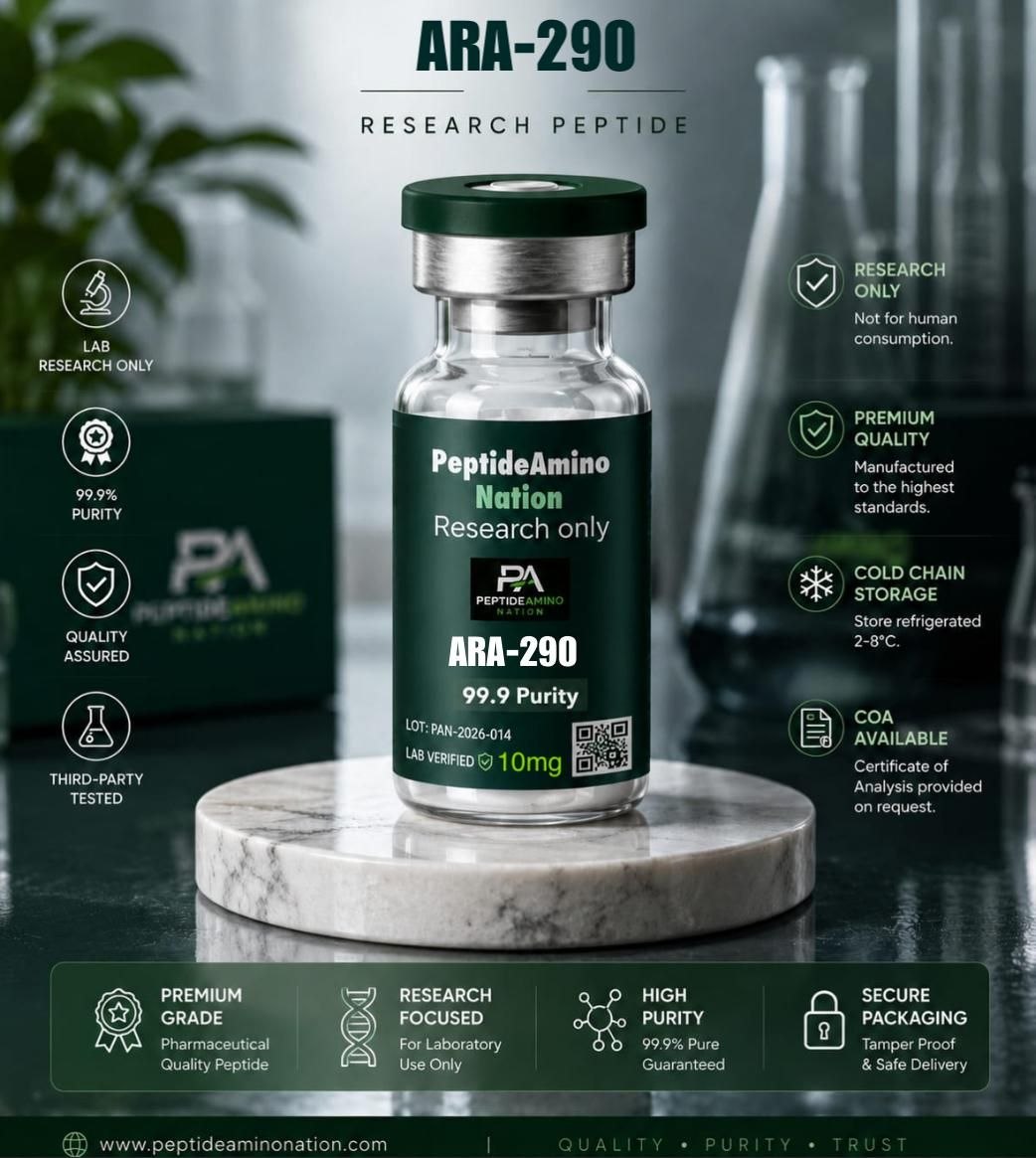
Premium Research Grade ARA-290 Peptide
https://pubmed.ncbi.nlm.nih.gov/
ARA-290 Peptide is an advanced synthetic peptide developed from the three-dimensional structure of erythropoietin (EPO). Rather than functioning as a conventional erythropoietic agent, ARA-290 was specifically designed to isolate the tissue-protective biological activities of EPO while eliminating its ability to stimulate red blood cell production.
This unique biological profile has positioned ARA-290 among the most promising research peptides for scientists exploring cellular repair mechanisms, inflammatory regulation, neuroprotection, and tissue preservation.
Unlike recombinant EPO, which activates the classical erythropoietin receptor responsible for erythropoiesis, ARA-290 selectively binds to the Innate Repair Receptor (IRR)—a heteromeric receptor complex composed of the erythropoietin receptor and the β-common receptor. Activation of this receptor initiates multiple intracellular signaling pathways associated with cellular protection, reduced inflammatory responses, and improved tissue survival following injury.
Its receptor selectivity allows researchers to investigate tissue repair pathways without the confounding effects of elevated hematocrit or excessive erythrocyte production.
Why Researchers Choose ARA-290 Peptide
Modern peptide research increasingly focuses on identifying molecules capable of regulating inflammation while promoting natural tissue recovery. ARA-290 has attracted significant scientific interest because it offers a highly selective mechanism of action centered on endogenous repair pathways.
Research laboratories worldwide investigate ARA-290 for studies involving:
• Cellular stress responses
• Neuroprotection
• Peripheral nerve regeneration
• Small fiber neuropathy models
• Chronic inflammatory signaling
• Tissue ischemia
• Ischemia-reperfusion injury
• Cytokine regulation
• Metabolic dysfunction
• Organ protection research
Because the peptide activates protective cellular pathways without affecting hematological function, it provides researchers with an excellent experimental model for studying inflammation resolution and tissue preservation independently of erythropoietic activity.
What Makes ARA-290 Different?
One of the defining characteristics of ARA-290 Peptide is its ability to separate the cytoprotective functions of erythropoietin from its hematopoietic effects.
Traditional erythropoietin activates receptors responsible for increasing red blood cell production. While beneficial in specific medical contexts, this mechanism can complicate research focused solely on tissue repair and inflammatory modulation.
ARA-290 addresses this challenge through selective activation of the Innate Repair Receptor, allowing investigators to study:
• Cellular protection mechanisms
• Tissue recovery pathways
• Inflammatory signaling modulation
• Neural repair processes
• Ischemic tissue preservation
without significantly influencing erythropoiesis.
This receptor specificity has made ARA-290 a valuable experimental peptide across numerous areas of biomedical research.
Mechanism of Action, Scientific Background & Research Applications of ARA-290 Peptide
Understanding the Science Behind ARA-290 Peptide
One of the primary reasons ARA-290 Peptide has attracted considerable scientific interest is its ability to selectively activate the body’s endogenous tissue-protection mechanisms without triggering erythropoiesis. Developed from the helix B surface of erythropoietin (EPO), this synthetic 11-amino acid peptide was engineered to preserve the protective signaling properties of EPO while avoiding activation of the classical erythropoietin receptor responsible for red blood cell production.
This receptor selectivity allows researchers to investigate tissue repair, inflammation resolution, and neuroprotective pathways with fewer confounding hematological effects, making ARA-290 a valuable tool in preclinical research.
Mechanism of Action of ARA-290 Peptide
Unlike recombinant erythropoietin, which binds primarily to the homodimeric erythropoietin receptor (EPOR), ARA-290 Peptide selectively targets the Innate Repair Receptor (IRR). This receptor is a heterocomplex formed by the erythropoietin receptor and the β-common receptor (βcR), which becomes upregulated during tissue injury, inflammation, ischemia, or metabolic stress.
Under normal physiological conditions, the IRR is minimally expressed. However, following cellular damage or inflammatory stimuli, expression of this receptor increases, allowing endogenous repair mechanisms to become activated.
When ARA-290 binds to the IRR, it initiates intracellular signaling cascades associated with tissue preservation rather than hematopoietic stimulation. Researchers have investigated several signaling pathways that may contribute to these effects, including:
• JAK2/STAT signaling
• PI3K/Akt pathway
• MAPK/ERK pathway
• Anti-inflammatory cytokine modulation
• Cellular survival signaling
Collectively, these pathways are associated with promoting cell survival, reducing inflammatory responses, and supporting tissue recovery in experimental models.
Selective Activation of the Innate Repair Receptor
The selective receptor affinity of ARA-290 Peptide distinguishes it from many other peptides derived from erythropoietin.
Because ARA-290 does not significantly activate the classical erythropoietin receptor responsible for erythropoiesis, researchers can investigate tissue-protective mechanisms without inducing elevated hematocrit or increased red blood cell production.
This characteristic has made ARA-290 particularly valuable for studies involving:
• Peripheral nerve injury
• Chronic inflammation
• Organ ischemia
• Metabolic disorders
• Tissue regeneration
• Neurological disease models
Its receptor specificity also enables clearer interpretation of experimental outcomes related to inflammation and cellular repair.
Anti-Inflammatory Research
Inflammation is a fundamental biological response to injury, infection, and tissue stress. While acute inflammation is protective, prolonged or chronic inflammation can contribute to tissue damage and impaired healing.
Researchers have investigated ARA-290 for its potential role in modulating inflammatory signaling pathways. Experimental studies suggest that activation of the IRR may influence the production of several pro-inflammatory mediators, including:
• Tumor Necrosis Factor-alpha (TNF-α)
• Interleukin-1 beta (IL-1β)
• Interleukin-6 (IL-6)
• Nuclear Factor-kappa B (NF-κB) signaling
By examining these pathways, investigators aim to better understand how endogenous repair mechanisms regulate inflammation following tissue injury.
Current research remains focused on laboratory and preclinical settings, and further investigation is needed to clarify the full biological effects of ARA-290.
Neuroprotection Research
The nervous system is particularly vulnerable to inflammatory damage and ischemic stress. As a result, researchers have explored ARA-290 Peptide in experimental models of neuroprotection and peripheral nerve injury.
Areas of investigation include:
• Protection of neuronal cells from inflammatory damage
• Peripheral nerve regeneration
• Small fiber neuropathy models
• Axonal preservation
• Neural tissue recovery following injury
Experimental findings have suggested that activation of the Innate Repair Receptor may support neuronal survival and reduce inflammatory injury in certain preclinical models. These observations have made ARA-290 an important research compound in studies examining mechanisms of nerve repair.
Research on Tissue Protection
One of the defining features of ARA-290 research is its focus on tissue preservation during periods of physiological stress.
Experimental studies have investigated its role in models involving:
• Ischemia-reperfusion injury
• Hypoxic stress
• Renal injury
• Cardiac tissue protection
• Skeletal muscle injury
• Organ preservation research
Researchers are particularly interested in understanding how selective activation of protective signaling pathways may reduce cellular damage while promoting recovery after acute injury.
Although encouraging results have been reported in preclinical research, these findings should not be interpreted as evidence of approved therapeutic use in humans.
Research into Small Fiber Neuropathy
Small fiber neuropathy (SFN) is characterized by damage to small sensory nerve fibers and has become an active area of ARA-290 investigation.
In laboratory research, scientists have examined how activation of the IRR may influence:
• Nerve fiber density
• Sensory neuron survival
• Peripheral nerve regeneration
• Neuroinflammation
• Pain-related signaling pathways
These studies contribute to a broader understanding of nerve repair mechanisms and the biology of chronic neuropathic conditions.
Experimental Applications of ARA-290 Peptide
Because of its selective biological activity, ARA-290 is used across a wide range of research disciplines. Common laboratory applications include:
• Neurobiology research
• Inflammation studies
• Tissue regeneration research
• Cellular stress response investigations
• Ischemia-reperfusion models
• Peripheral neuropathy studies
• Cytokine signaling research
• Organ protection experiments
• Molecular pharmacology
• Peptide receptor biology
Its versatility makes ARA-290 an important research tool for investigators seeking to better understand endogenous tissue-repair mechanisms.
Advantages of ARA-290 Peptide in Research
Researchers value ARA-290 Peptide for several reasons:
• High receptor selectivity for the Innate Repair Receptor
• Does not significantly stimulate red blood cell production
• Suitable for investigating inflammation and tissue repair independently of erythropoiesis
• High purity (≥98%) supports experimental reproducibility
• Compatible with a variety of laboratory research models
• Stable lyophilized formulation for convenient storage and handling
• Widely studied in preclinical models of neuroprotection and tissue preservation
These characteristics have established ARA-290 as a specialized peptide for studying endogenous repair biology.
Important Research Disclaimer
ARA-290 Peptide is supplied exclusively as a Research Grade Peptide. It is intended solely for qualified laboratory professionals conducting in vitro experiments and approved in vivo animal research. This product is not approved for human consumption, clinical treatment, veterinary use, or diagnostic procedures. Any references to biological activity relate to published research and experimental investigations and should not be interpreted as claims of safety or efficacy in humans.
Laboratory Information, Quality Control, Storage & Handling of ARA-290 Peptide
Laboratory Research Information
Maintaining the integrity of ARA-290 Peptide throughout storage, preparation, and experimental use is essential for generating reliable and reproducible research data. As with many synthetic peptides, proper laboratory handling minimizes degradation and helps preserve peptide stability over time.
Our ARA-290 Peptide is manufactured under stringent quality control procedures using advanced peptide synthesis technologies. Every production batch undergoes comprehensive analytical testing to verify purity, identity, and consistency before release for research applications.
Researchers working in molecular biology, neuroscience, immunology, pharmacology, and regenerative medicine can confidently incorporate this peptide into qualified laboratory protocols designed for preclinical investigations.
Quality Control Standards
Consistency is fundamental to peptide research. Every lot of ARA-290 Peptide is subjected to rigorous quality assurance procedures to help ensure reproducibility across experimental studies.
Quality testing typically includes:
• High-Performance Liquid Chromatography (HPLC) purity analysis
• Mass Spectrometry (MS) identity confirmation
• Visual inspection for appearance and integrity
• Batch-to-batch consistency verification
• Controlled manufacturing documentation
• Stability monitoring under recommended storage conditions
These procedures help provide researchers with a peptide suitable for demanding laboratory investigations.
Purity and Analytical Testing
Purity is one of the most important parameters influencing peptide performance.
Our ARA-290 Peptide is manufactured to a minimum purity of 98%, confirmed through High-Performance Liquid Chromatography (HPLC). Molecular identity is further verified using Mass Spectrometry (MS), ensuring that the synthesized peptide corresponds to the expected molecular profile.
High analytical purity helps reduce the presence of synthesis-related impurities that could interfere with experimental interpretation.
Reconstitution Guidelines
ARA-290 is supplied as a sterile lyophilized powder, providing enhanced stability during shipping and long-term storage.
For laboratory research, the peptide may be reconstituted using appropriate sterile laboratory solvents compatible with experimental protocols, including:
• Sterile Water for Injection (SWFI)
• Bacteriostatic Water
• Phosphate Buffered Saline (PBS), • when compatible with the intended research application
Researchers should select a solvent appropriate for their experimental design and institutional laboratory procedures.
To help preserve peptide integrity:
• Allow the vial to reach room temperature before opening.
• Add the chosen solvent slowly along the inner wall of the vial rather than directly onto the powder.
• Gently swirl the solution until fully dissolved.
• Avoid vigorous shaking or excessive agitation, which may contribute to peptide degradation or foaming.
The final concentration should be determined according to the specific requirements of the research protocol.
Storage Recommendations
Proper storage plays a critical role in maintaining peptide stability.
Lyophilized ARA-290
When stored in a tightly sealed container at -20°C, the lyophilized peptide remains stable for extended periods under recommended laboratory conditions.
For short-term handling during routine laboratory procedures, brief exposure to room temperature is generally acceptable. However, prolonged exposure to heat, moisture, or direct sunlight should be avoided.
Reconstituted Solution
Once reconstituted:
• Store at 2–8°C (refrigerated) for short-term laboratory use.
• For longer storage, divide the solution into small aliquots and freeze at -20°C.
• Avoid repeated freeze-thaw cycles, as they may gradually reduce peptide stability and experimental consistency.
Following these storage practices helps maintain the quality of the peptide throughout the duration of research projects.
Best Practices for Laboratory Handling
To maximize reproducibility and reduce the risk of contamination, researchers are encouraged to follow established laboratory procedures when handling ARA-290.
Recommended best practices include:
• Use sterile laboratory equipment and consumables.
• Prepare solutions within a clean laboratory environment.
• Label all aliquots with preparation date and concentration.
• Minimize unnecessary exposure to air and moisture.
• Use calibrated pipettes for accurate solution preparation.
• Dispose of unused material according to institutional laboratory guidelines.
Adhering to these practices helps support consistent experimental outcomes.
Research Applications
Due to its selective activation of the Innate Repair Receptor (IRR), ARA-290 Peptide has been investigated across a broad range of scientific disciplines. Ongoing laboratory research explores its role in understanding cellular protection and repair mechanisms in various experimental models.
Common areas of investigation include:
• Neurobiology and neuroprotection
• Peripheral nerve injury research
• Small fiber neuropathy models
• Tissue regeneration studies
• Inflammation and cytokine signaling
• Ischemia-reperfusion injury
• Organ protection research
• Metabolic stress response
• Cellular survival signaling
• Peptide receptor pharmacology
These applications contribute to expanding scientific knowledge of endogenous tissue-repair pathways.
Why Choose Our ARA-290 Peptide?
Researchers depend on reliable materials to generate reproducible data. Our ARA-290 Peptide is manufactured with quality and consistency in mind.
Key advantages include:
• ≥98% purity verified by HPLC
Identity confirmed by Mass Spectrometry
• High batch-to-batch consistency
• Stable lyophilized formulation
• Strict quality control during manufacturing
• Suitable for a wide range of laboratory research applications
• Produced exclusively for scientific research use
Our commitment to quality helps researchers obtain dependable materials for preclinical investigations.
Research Use Only Disclaimer
ARA-290 Peptide is supplied exclusively as a Research Grade Peptide. This product is intended only for qualified laboratory personnel conducting scientific research. It is not intended for human consumption, therapeutic use, veterinary administration, or diagnostic procedures. Any information presented regarding biological activity reflects findings from experimental and published scientific research and should not be interpreted as medical advice or evidence of approved clinical efficacy.
Technical Overview, Scientific Advantages, Product Summary & Research Disclaimer
Technical Overview of ARA-290 Peptide
ARA-290 Peptide represents a significant advancement in peptide research by selectively harnessing the tissue-protective properties of erythropoietin (EPO) without activating its erythropoietic effects. This design enables researchers to investigate endogenous repair mechanisms with greater specificity and fewer confounding variables related to increased red blood cell production.
During physiological stress, tissue injury, ischemia, or inflammation, cells increase the expression of the Innate Repair Receptor (IRR). This receptor is formed through the interaction of the erythropoietin receptor (EPOR) and the β-common receptor (βcR), creating a signaling complex that plays a role in cellular protection and repair.
ARA-290 was engineered to selectively activate this receptor complex, allowing researchers to study pathways involved in tissue preservation while avoiding meaningful activation of the classical erythropoietin receptor responsible for hematopoiesis.
This receptor selectivity has made ARA-290 an important research peptide for investigations involving inflammation, neuronal survival, tissue regeneration, and cellular stress responses.
The Tissue-Protective Signaling Cascade
Activation of the Innate Repair Receptor by ARA-290 has been investigated in relation to several intracellular signaling pathways associated with tissue protection. Experimental studies suggest that receptor activation may contribute to three broad biological processes:
1. Regulation of Inflammatory Responses
Inflammation is essential for healing, yet persistent inflammation can contribute to tissue damage and delayed recovery.
Researchers have explored whether ARA-290-mediated IRR activation may influence signaling pathways involved in inflammatory regulation, including:
• Reduced activation of NF-κB signaling
• Modulation of TNF-α production
• Regulation of IL-1β expression
• Reduction of IL-6 release
• Support for balanced immune signaling
These investigations help scientists better understand how endogenous repair systems respond following injury.
2. Cellular Protection
Cell survival is critical following ischemia, oxidative stress, or inflammatory injury.
Preclinical research has examined whether ARA-290 may support cellular resilience by influencing pathways associated with:
• Programmed cell survival
• Mitochondrial function
• Oxidative stress responses
• Cellular energy preservation
• Protection against ischemia-reperfusion injury
These studies remain focused on laboratory and animal research models and continue to expand scientific understanding of cytoprotective signaling.
3. Neuroprotective Research
Neural tissues are particularly sensitive to inflammation and reduced blood supply. Consequently, ARA-290 has become an important research compound in neuroscience.
Experimental investigations have evaluated its role in:
• Peripheral nerve preservation
• Sensory neuron protection
• Axonal recovery
• Small fiber neuropathy models
• Neuroinflammatory signaling
• Neural tissue repair
These studies contribute to ongoing research into mechanisms that support nervous system recovery after injury.
Advantages of ARA-290 Peptide for Scientific Research
ARA-290 offers several characteristics that make it attractive for laboratory investigations.
Highly Selective Receptor Targeting
Selective activation of the Innate Repair Receptor allows researchers to focus on tissue-protective pathways while minimizing activation of erythropoietic signaling.
High Analytical Purity
Manufactured to ≥98% purity, ARA-290 undergoes rigorous analytical testing using High-Performance Liquid Chromatography (HPLC) and Mass Spectrometry (MS) to verify identity and purity.
Excellent Experimental Reproducibility
Strict quality control and batch consistency help support reproducible results across independent laboratory studies.
Broad Research Applications
ARA-290 is suitable for research in:
• Neuroscience
• Immunology
• Molecular biology
• Regenerative medicine
• Pharmacology
• Inflammation research
• Cellular biology
• Peptide receptor signaling
Manufacturing Excellence
Every batch of our ARA-290 Peptide is produced using advanced solid-phase peptide synthesis (SPPS) under carefully controlled manufacturing conditions.
Our quality-focused production process includes:
• Carefully selected raw materials
• Controlled peptide synthesis
• Advanced purification procedures
• HPLC purity verification
• Mass Spectrometry confirmation
• Comprehensive batch documentation
• Strict quality assurance protocols
These manufacturing standards help ensure researchers receive a consistent and reliable product suitable for demanding scientific applications.
Why Researchers Trust High-Quality Research Peptides
Reliable experimental outcomes depend on reliable research materials. Variability in peptide purity, identity, or storage conditions can influence research findings and reproducibility.
By choosing high-quality ARA-290 Peptide, researchers benefit from:
• Verified analytical purity
• Consistent manufacturing standards
• Reliable peptide identity
• Stable lyophilized formulation
• Documented quality control
• Reduced batch-to-batch variability
These factors contribute to more dependable laboratory investigations and improved confidence in experimental results.
Product Summary
ARA-290 Peptide is an advanced synthetic peptide derived from the tissue-protective domain of erythropoietin. Through selective activation of the Innate Repair Receptor, it has become a valuable research tool for scientists studying inflammation, cellular protection, neurobiology, tissue regeneration, ischemia, and peripheral nerve repair.
Its inability to significantly stimulate erythropoiesis distinguishes ARA-290 from recombinant erythropoietin and enables researchers to investigate endogenous tissue-repair pathways without the confounding effects associated with elevated red blood cell production.
Manufactured to ≥98% purity and verified through HPLC and Mass Spectrometry, our Research Grade ARA-290 is designed to provide the consistency, stability, and quality expected by professional research laboratories.
Whether supporting investigations into inflammatory signaling, neuronal preservation, tissue recovery, or receptor pharmacology, ARA-290 continues to be recognized as an important peptide for advancing preclinical scientific research.
Research Grade Disclaimer
Research Use Only (RUO): ARA-290 Peptide is supplied exclusively for laboratory research purposes. This product is intended for use by qualified researchers in in vitro experiments and approved in vivo animal studies. It is not intended for human consumption, clinical treatment, therapeutic use, veterinary administration, or diagnostic applications. Statements regarding biological activity are based on published scientific literature and experimental research and should not be interpreted as claims of clinical safety or efficacy.
Why Buy ARA-290 Peptide from Peptide Amino Nation?
At Peptide Amino Nation, we are committed to supplying researchers with premium-quality research peptides backed by strict quality standards and reliable documentation. Our focus is on providing products that support reproducible laboratory research while maintaining transparency in manufacturing and quality control.
When you choose our ARA-290 Peptide, you benefit from:
• ≥98% HPLC-verified purity
• Mass Spectrometry identity confirmation
• High batch-to-batch consistency
• Carefully manufactured research-grade quality
• Reliable support for scientific research applications
• Secure packaging to help preserve peptide stability during transport
We are dedicated to helping research professionals access high-quality peptide products for non-clinical scientific investigations.
Continue Learning
To deepen your understanding of this product, Explore our related educational articles by clicking the tags below.
Understanding Peptide Oxidation: 15 Powerful Ways to Prevent Costly Peptide Degradation
Can Different Peptides Be Reconstituted the Same Way? 9 Powerful Facts Every Researcher Must Know
Light Exposure vs Peptide Stability: 9 Powerful Truths to Prevent Costly Research Failures
Frequently Asked Questions About ARA-290 Peptide
What is ARA-290 Peptide?
ARA-290 Peptide is a synthetic 11-amino acid peptide derived from the tissue-protective region of erythropoietin (EPO). It is designed for laboratory research investigating innate repair receptor signaling, inflammation, neuroprotection, and tissue repair without significantly stimulating red blood cell production.
What is ARA-290 used for in research?
Researchers use ARA-290 in preclinical studies involving tissue protection, neurobiology, peripheral nerve injury, inflammation, ischemia-reperfusion injury, metabolic stress, and small fiber neuropathy. It serves as a valuable research tool for exploring endogenous repair pathways.
Does ARA-290 increase red blood cell production?
Unlike recombinant erythropoietin, ARA-290 is engineered to selectively activate the Innate Repair Receptor rather than the classical erythropoietin receptor responsible for erythropoiesis. As a result, it is studied for tissue-protective signaling without the primary hematopoietic effects associated with EPO.
What purity is your ARA-290 Peptide?
Our ARA-290 Peptide is manufactured to a minimum purity of 98%, with purity verified by High-Performance Liquid Chromatography (HPLC) and identity confirmed using Mass Spectrometry (MS).
How should ARA-290 Peptide be stored?
The lyophilized peptide should be stored at -20°C for long-term stability. After reconstitution, it is recommended to refrigerate the solution at 2–8°C for short-term use or aliquot and freeze at -20°C to minimize repeated freeze-thaw cycles.
Is ARA-290 approved for human use?
No. ARA-290 sold by Peptide Amino Nation is supplied strictly as a Research Use Only (RUO) product. It is intended exclusively for qualified laboratory research and is not approved for human consumption, therapeutic use, veterinary use, or diagnostic applications.
Why choose Peptide Amino Nation for ARA-290 Peptide?
Peptide Amino Nation is committed to providing researchers with premium research peptides manufactured under strict quality control. Every batch of ARA-290 undergoes rigorous analytical testing to help ensure high purity, consistency, and reliable performance in laboratory research.

Reviews
There are no reviews yet.