Description
Product Overview
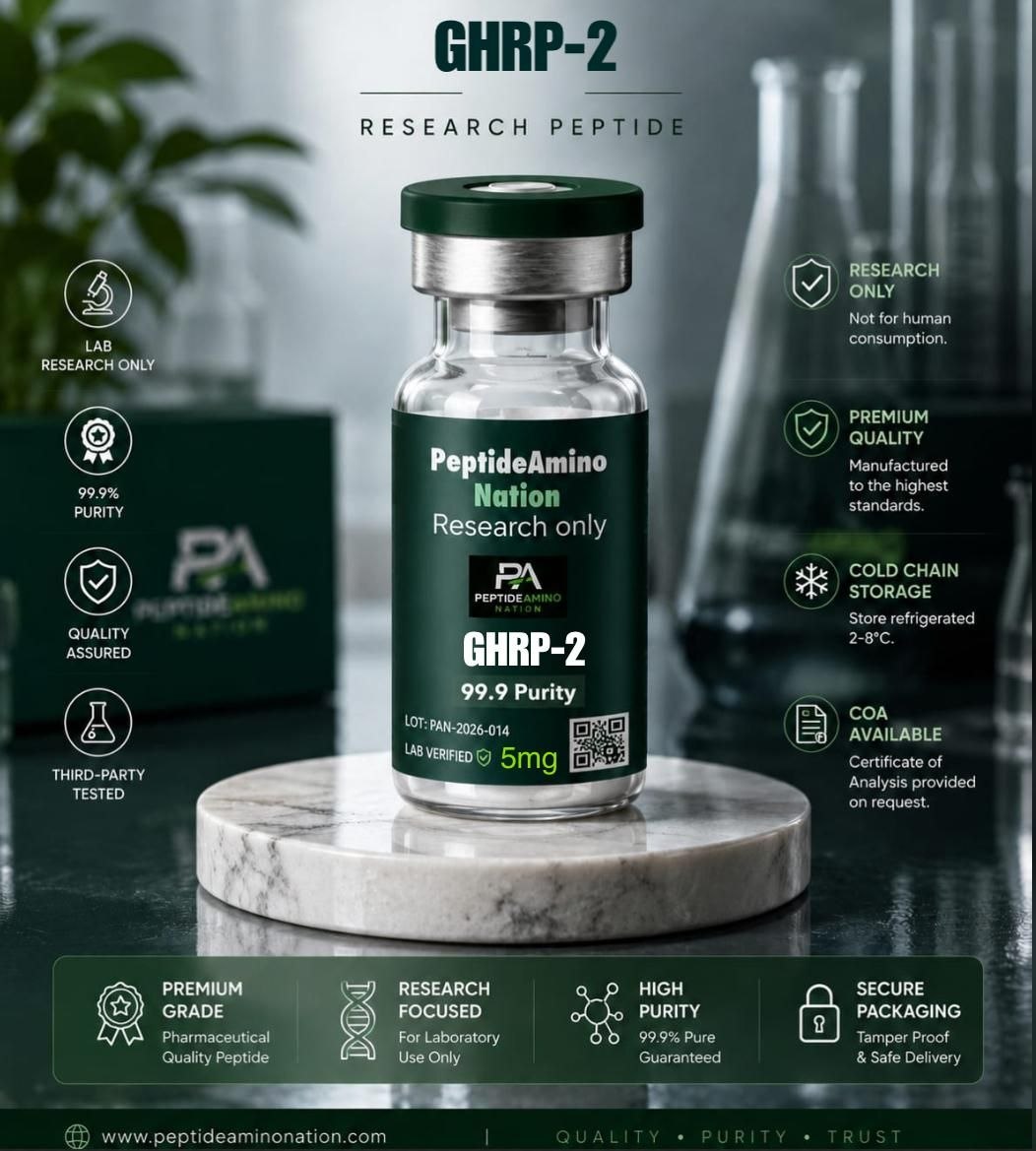
GHRP-2 Peptide (Growth Hormone Releasing Peptide-2) is a synthetic hexapeptide specifically engineered for advanced laboratory research into endogenous growth hormone regulation and receptor-mediated signaling. As one of the most extensively characterized members of the Growth Hormone Secretagogue family, GHRP-2 has earned widespread recognition for its high receptor selectivity, dependable biological activity, and reproducible performance across diverse scientific disciplines.
Unlike exogenous growth hormone, which bypasses normal endocrine control mechanisms, GHRP-2 stimulates physiological growth hormone release by selectively binding to the Growth Hormone Secretagogue Receptor (GHS-R1a). This receptor is predominantly expressed within the anterior pituitary gland and hypothalamic regions responsible for coordinating hormone secretion and neuroendocrine communication.
Upon receptor activation, GHRP-2 initiates intracellular signaling pathways that promote the pulsatile release of endogenous growth hormone while maintaining many of the body’s natural regulatory processes. This mechanism makes it an invaluable research compound for laboratories investigating hormone kinetics, receptor pharmacology, endocrine feedback systems, and cellular signaling.
Researchers continue to investigate GHRP-2 across a broad range of experimental models examining metabolic regulation, pituitary physiology, appetite-associated signaling, growth factor interactions, and molecular communication pathways. Its predictable receptor activity and favorable stability profile have established it as a trusted reference compound for peptide-based endocrine research.
The carefully engineered incorporation of non-natural amino acids within the peptide sequence enhances resistance to enzymatic degradation, improving stability during laboratory experimentation and supporting reliable, reproducible research outcomes.
Manufactured exclusively for scientific investigation, GHRP-2 Peptide from Peptide Amino Nation is synthesized using advanced peptide chemistry, purified to rigorous research standards, and verified through comprehensive analytical testing to ensure researchers receive a product of exceptional quality and consistency.
Whether your research focuses on endocrine signaling, receptor activation, molecular biology, or metabolic physiology, GHRP-2 Peptide provides the analytical reliability and chemical integrity required for high-quality scientific investigation.
For Research Use Only. This product is intended exclusively for laboratory research, analytical testing, and scientific investigation. It is not intended for human or veterinary use, consumption, diagnosis, treatment, or therapeutic application.
Why Researchers Choose GHRP-2 Peptide
https://www.ncbi.nlm.nih.gov/
The field of peptide research has expanded rapidly over the past few decades, introducing numerous Growth Hormone Secretagogues with varying receptor affinities and biological characteristics. Among these compounds, GHRP-2 Peptide has earned a distinguished reputation for its potent, selective activation of the Growth Hormone Secretagogue Receptor (GHS-R1a) and its exceptional consistency in laboratory research.
Scientists value GHRP-2 because it offers a dependable experimental model for investigating endogenous growth hormone release without introducing recombinant growth hormone into the research system. By stimulating the body’s natural endocrine pathways, GHRP-2 allows researchers to evaluate physiological hormone secretion patterns while preserving many of the body’s normal regulatory mechanisms.
Its reliable pharmacological profile has made it one of the most frequently studied Growth Hormone Secretagogues in endocrinology, receptor biology, molecular pharmacology, metabolism, and neuroendocrine science.
Researchers choose GHRP-2 because it provides:
• Highly selective activation of the Growth Hormone Secretagogue Receptor (GHS-R1a)
• Reliable stimulation of endogenous growth hormone secretion
• Excellent chemical stability during laboratory investigations
• Well-documented pharmacological behavior
• Strong receptor affinity with reproducible biological activity
• Consistent performance in both in vitro and in vivo research models
• Extensive scientific literature supporting experimental applications
• High batch-to-batch consistency for dependable laboratory outcomes
Its versatility enables researchers to investigate multiple biological systems using one highly characterized research peptide.
Mechanism of Action of GHRP-2 Peptide
The scientific value of GHRP-2 Peptide lies in its precise interaction with the Growth Hormone Secretagogue Receptor (GHS-R1a), a G-protein-coupled receptor primarily expressed within the anterior pituitary gland and the hypothalamus.
Unlike Growth Hormone-Releasing Hormone (GHRH), which activates its own dedicated receptor, GHRP-2 follows a distinct signaling pathway that complements endogenous endocrine regulation.
Upon binding to GHS-R1a, GHRP-2 activates intracellular G-protein signaling, initiating phospholipase C (PLC) activation. This leads to the production of inositol triphosphate (IP₃) and diacylglycerol (DAG), which promote the release of intracellular calcium stores.
The rapid increase in intracellular calcium concentration triggers exocytosis of growth hormone-containing secretory vesicles from pituitary somatotroph cells.
In addition to directly stimulating pituitary secretion, GHRP-2 also influences hypothalamic regulation by reducing somatostatin-mediated inhibition while supporting endogenous Growth Hormone-Releasing Hormone activity. The combined effect produces a physiological pulse of growth hormone release that closely resembles natural endocrine signaling.
This mechanism makes GHRP-2 an exceptionally valuable research tool for investigating hormone secretion dynamics, receptor activation, intracellular signaling, and endocrine communication.
Molecular Design Optimized for Research
Every structural component of GHRP-2 Peptide has been carefully engineered to maximize receptor affinity while improving stability during laboratory experimentation.
Its amino acid sequence is:
D-Ala-D-β-Nal-Ala-Trp-D-Phe-Lys-NH₂
One of the defining characteristics of GHRP-2 is the inclusion of non-natural amino acids such as D-Alanine, D-β-Naphthylalanine (D-β-Nal), and D-Phenylalanine.
These structural modifications help reduce susceptibility to enzymatic degradation by naturally occurring proteases, allowing the peptide to remain stable for longer periods during experimental investigations.
The molecular design provides several important research advantages:
• Improved receptor selectivity
• Enhanced resistance to enzymatic breakdown
• Greater experimental stability
• Reliable biological activity
• Consistent laboratory performance
• Excellent reproducibility across research studies
These properties have helped establish GHRP-2 as one of the most dependable Growth Hormone Secretagogues available for scientific research.
Biological Pathways Influenced by GHRP-2 Peptide
Although GHRP-2 is primarily recognized for stimulating endogenous growth hormone secretion, activation of the Growth Hormone Secretagogue Receptor influences numerous interconnected biological pathways.
Researchers continue to investigate these signaling networks to better understand their roles in endocrine regulation and cellular communication.
Endocrine Regulation
One of the primary applications of GHRP-2 involves studying communication between the hypothalamus and the anterior pituitary gland.
Laboratory investigations commonly examine:
• Growth hormone pulsatility
• Hormonal feedback mechanisms
• Pituitary responsiveness
• Secretagogue receptor signaling
• Neuroendocrine coordination
• Endocrine communication networks
These studies continue to expand scientific understanding of hormone regulation under physiological conditions.
Cellular Signaling Research
Activation of GHS-R1a initiates multiple intracellular signaling pathways that regulate numerous cellular activities.
Researchers utilize GHRP-2 to investigate:
• Calcium-dependent signaling
• Protein kinase activation
• Gene transcription
• Signal transduction pathways
• Cellular communication
• Receptor-mediated intracellular responses
Understanding these molecular events provides valuable insights into peptide-mediated cellular regulation.
Metabolic Signaling
Growth hormone plays a central role in coordinating metabolic processes throughout the body.
Because GHRP-2 stimulates endogenous hormone secretion, researchers frequently investigate its influence on:
• Energy homeostasis
• Nutrient utilization
• Hormonal metabolism
• Cellular energy regulation
• Endocrine adaptation
• Metabolic communication pathways
These investigations continue to contribute to a deeper understanding of endocrine-metabolic interactions.
Neuroendocrine Communication
The hypothalamus functions as a critical integration center linking the nervous system with endocrine physiology.
Since GHRP-2 activates receptors expressed within hypothalamic regions, researchers frequently employ it to investigate:
• Hypothalamic signaling pathways
• Hormone-neuron interactions
• Neuroendocrine feedback
• Central endocrine regulation
• Receptor-mediated neuronal communication
These studies continue to provide valuable information regarding the coordination of hormonal signaling throughout the body.
Scientific Advantages of GHRP-2 Peptide
The continued use of GHRP-2 Peptide in laboratories around the world reflects its outstanding experimental characteristics and well-established scientific profile.
High Receptor Selectivity
GHRP-2 demonstrates strong affinity for the Growth Hormone Secretagogue Receptor while maintaining excellent specificity for its intended signaling pathway.
Reliable Experimental Performance
Its predictable biological behavior allows researchers to generate highly reproducible data across multiple laboratory models and experimental conditions.
Enhanced Stability
Strategically incorporated D-amino acids improve resistance to enzymatic degradation, supporting reliable peptide integrity throughout research protocols.
Extensive Scientific Literature
GHRP-2 has been investigated in numerous peer-reviewed studies spanning endocrinology, molecular biology, pharmacology, and metabolic science, making it one of the best-characterized Growth Hormone Secretagogues available.
Broad Research Applications
Its versatility supports investigations involving endocrine physiology, receptor pharmacology, metabolic regulation, neuroendocrinology, cellular signaling, and molecular biology, making GHRP-2 a valuable tool across multiple scientific disciplines.
As peptide science continues to advance, GHRP-2 Peptide remains an essential research compound for laboratories seeking to better understand the mechanisms governing endogenous growth hormone secretion and receptor-mediated biological communication.
For Research Use Only. This product is supplied exclusively for laboratory research and analytical applications. It is not intended for human or veterinary use, diagnosis, treatment, or therapeutic purposes.
Scientific Research Applications of GHRP-2 Peptide
The growing interest in GHRP-2 Peptide reflects its versatility as a research tool across numerous scientific disciplines. Its selective activation of the Growth Hormone Secretagogue Receptor (GHS-R1a) provides researchers with a dependable model for exploring endocrine regulation, receptor pharmacology, intracellular signaling, and metabolic communication.
Unlike many experimental compounds with narrowly defined applications, GHRP-2 has demonstrated value in a broad spectrum of laboratory investigations. Its predictable biological activity and well-documented mechanism of action continue to make it a preferred peptide for researchers seeking reproducible experimental outcomes.
Below are some of the principal areas where GHRP-2 Peptide is utilized in modern scientific research.
Endocrinology and Growth Hormone Research
One of the primary applications of GHRP-2 Peptide is the investigation of endogenous growth hormone secretion and the physiological mechanisms that regulate endocrine communication.
By selectively stimulating the Growth Hormone Secretagogue Receptor (GHS-R1a), GHRP-2 enables researchers to examine pulsatile growth hormone release while preserving many of the body’s natural hormonal feedback systems. This makes it particularly valuable for studying endocrine regulation under controlled laboratory conditions.
Researchers frequently investigate:
• Growth hormone release kinetics
• Pituitary gland responsiveness
• Endocrine feedback mechanisms
• Hormonal communication pathways
• Secretagogue receptor pharmacology
• Neuroendocrine regulation
• Circadian patterns of hormone secretion
These studies continue to improve scientific understanding of hormone regulation and endocrine physiology.
Receptor Pharmacology Research
Because GHRP-2 exhibits high affinity for the Growth Hormone Secretagogue Receptor, it has become a valuable compound for receptor pharmacology investigations.
Researchers utilize GHRP-2 to better understand:
Receptor activation mechanisms
Ligand-receptor interactions
Signal amplification
Receptor sensitivity
Cellular receptor regulation
Pharmacodynamic responses
These investigations help characterize the complex biological interactions between peptide ligands and their target receptors.
Cellular Signaling and Molecular Biology
Activation of GHS-R1a initiates multiple intracellular signaling pathways responsible for coordinating numerous physiological responses.
Scientists frequently employ GHRP-2 Peptide to investigate:
• Calcium signaling pathways
• Phospholipase C activation
• IP₃ and DAG signaling
• Protein kinase activation
• Gene transcription regulation
• Cellular communication networks
• Signal transduction mechanisms
These molecular investigations continue to provide valuable insights into peptide-mediated cellular communication.
Metabolic Regulation Studies
Growth hormone plays a central role in maintaining metabolic homeostasis.
Because GHRP-2 stimulates endogenous hormone secretion through physiological pathways, it has become an important experimental tool for studying endocrine-metabolic interactions.
Research commonly explores:
• Energy homeostasis
• Nutrient metabolism
• Hormonal regulation of metabolism
• Glucose signaling pathways
• Lipid metabolism
• Cellular energy utilization
• Metabolic adaptation
Understanding these complex relationships contributes to broader scientific knowledge regarding endocrine control of metabolism.
Neuroendocrine Physiology Research
The hypothalamus integrates signals from the nervous system and endocrine system to maintain physiological balance.
Since GHRP-2 activates receptors located within hypothalamic regions involved in endocrine regulation, researchers frequently investigate its effects on:
• Neuroendocrine signaling
• Hormone-neuron communication
• Hypothalamic regulation
• Endocrine adaptation
• Central signaling networks
• Physiological feedback mechanisms
These studies continue to expand scientific understanding of hormonal communication throughout the body.
Growth Factor Signaling Research
Endogenous growth hormone stimulates numerous downstream signaling pathways involving growth factors that regulate cellular activity.
Researchers employ GHRP-2 to investigate experimental models involving:
• Growth factor expression
• Cellular proliferation pathways
• Protein synthesis
• Extracellular signaling
• Tissue remodeling mechanisms
• Cellular adaptation
These investigations help scientists better understand the molecular coordination of growth-related biological processes.
Manufactured to the Highest Research Standards
At Peptide Amino Nation, every vial of GHRP-2 Peptide is manufactured with precision, consistency, and scientific integrity at the forefront of production.
From raw material selection to final analytical verification, each stage of manufacturing follows stringent quality control procedures designed to support reliable laboratory research.
Every production batch is carefully monitored to ensure consistent peptide identity, exceptional purity, and reproducible performance across multiple research applications.
Advanced Solid-Phase Peptide Synthesis (SPPS)
GHRP-2 is synthesized using Solid-Phase Peptide Synthesis (SPPS), the internationally recognized gold standard for manufacturing research peptides.
This advanced synthesis method allows amino acids to be assembled sequentially with remarkable precision, resulting in high sequence fidelity and outstanding product consistency.
Advantages of SPPS include:
• Precise amino acid assembly
• Excellent sequence accuracy
• High chemical purity
• Minimal synthesis impurities
• Outstanding manufacturing consistency
• Reliable scalability for research production
The use of SPPS ensures every vial meets the demanding expectations of professional research laboratories.
Comprehensive Quality Assurance
Quality is one of the most important factors influencing successful peptide research.
To help ensure dependable experimental performance, every batch of GHRP-2 Peptide undergoes rigorous analytical testing before release.
Our quality assurance program evaluates:
• Peptide identity
• Chemical purity
• Molecular integrity
• Manufacturing consistency
• Analytical accuracy
This multi-step verification process helps provide researchers with confidence in every experiment.
High-Performance Liquid Chromatography (HPLC)
Each batch is analyzed using High-Performance Liquid Chromatography (HPLC) to verify peptide purity and identify any trace impurities that may affect laboratory investigations.
Our GHRP-2 Peptide is verified to achieve a minimum purity of 98%, supporting reproducible scientific research and consistent laboratory performance.
Mass Spectrometry (MS) Verification
Following purification, every production lot undergoes Mass Spectrometry (MS) analysis to confirm molecular weight and peptide identity.
This highly sensitive analytical technique provides researchers with additional confidence that each batch contains the correct peptide sequence manufactured to strict research standards.
Packaging Designed to Preserve Peptide Integrity
Maintaining peptide quality extends beyond manufacturing—it also requires appropriate packaging and storage protection.
To help preserve structural stability, GHRP-2 is supplied as a sterile lyophilized powder packaged in laboratory-grade borosilicate glass vials.
Each vial is sealed under carefully controlled conditions to minimize exposure to moisture and environmental contaminants before laboratory use.
The advantages of this packaging system include:
• Enhanced long-term peptide stability
• Protection against moisture exposure
• Improved structural preservation
• Reliable laboratory handling
• Consistent storage performance
• Reduced environmental degradation
From synthesis through final packaging, every stage of production is designed to support the reproducibility, accuracy, and reliability required for advanced peptide research.
For Research Use Only. GHRP-2 Peptide is supplied exclusively for laboratory research, analytical testing, and scientific investigation. It is not intended for human or veterinary use, diagnosis, treatment, or therapeutic application.
Reconstitution Guidelines for GHRP-2 Peptide
Proper laboratory handling is essential for preserving the purity, structural integrity, and biological activity of GHRP-2 Peptide. Although every vial is manufactured under strict quality control standards, appropriate reconstitution techniques are critical for maintaining consistency throughout experimental procedures.
Researchers should always follow validated laboratory protocols and aseptic handling practices when preparing peptide solutions for scientific investigation.
Recommended Reconstitution Procedure
Before opening the vial, allow GHRP-2 Peptide to gradually reach room temperature. This simple precaution helps reduce condensation that may introduce unwanted moisture into the vial.
Using sterile laboratory techniques, slowly add an appropriate research-grade solvent. Depending on the requirements of the experimental protocol, commonly used solvents include:
• Bacteriostatic Water
• Sterile Water for Injection
• Sterile 0.9% Sodium Chloride (Normal Saline)
The selected solvent should be compatible with the objectives of the research project and any established laboratory standard operating procedures.
For optimal dissolution, slowly direct the solvent against the inner wall of the vial rather than injecting it directly onto the lyophilized peptide. This gentle technique minimizes physical stress on the peptide and promotes gradual rehydration.
After adding the solvent, gently swirl the vial using slow circular motions until the peptide has completely dissolved into a clear, colorless solution.
Do not shake the vial vigorously.
Excessive agitation may introduce foam and unnecessary mechanical stress, which can affect the integrity of sensitive peptide preparations.
When prepared correctly, GHRP-2 should produce a transparent solution free from visible particles or discoloration.
Storage Recommendations
Proper storage plays an important role in preserving the stability and analytical reliability of GHRP-2 Peptide throughout laboratory research.
Environmental factors such as heat, humidity, oxygen, and repeated temperature fluctuations may gradually reduce peptide stability if appropriate storage conditions are not maintained.
Following recommended storage practices helps maximize reproducibility across experimental studies.
Un reconstituted GHRP-2 Peptide
The lyophilized peptide demonstrates excellent stability when stored in a cool, dry environment protected from excessive heat and moisture.
For long-term preservation, unopened vials should generally be stored at:
−20°C or below
When maintained under appropriate laboratory conditions, the peptide may retain its chemical integrity for extended storage periods.
Temporary exposure to room temperature during shipping or routine laboratory handling is generally acceptable provided the product remains sealed, dry, and protected from prolonged environmental stress.
Reconstituted GHRP-2 Solution
Following reconstitution, GHRP-2 becomes more sensitive to environmental conditions and should be handled with additional care.
For best laboratory practice, store the prepared solution under refrigeration between:
2°C and 8°C
Researchers are encouraged to prepare only the quantity required for active research projects to minimize unnecessary storage time.
Repeated freeze-thaw cycles should be avoided whenever possible, as they may contribute to peptide degradation and reduced experimental consistency.
To further preserve solution quality, protect reconstituted samples from prolonged light exposure and unnecessary temperature fluctuations.
Laboratory Handling Best Practices
Successful peptide research depends not only on peptide purity but also on consistent laboratory handling procedures.
Professional research laboratories commonly implement the following best practices when working with GHRP-2 Peptide:
• Maintain sterile working conditions during reconstitution.
• Use sterile syringes, pipettes, and laboratory equipment.
• Store peptides in clean, dry laboratory environments.
• Clearly label all prepared solutions with preparation dates and study identifiers.
• Minimize repeated puncturing of vial stoppers whenever practical.
• Protect peptide solutions from direct sunlight and excessive heat.
• Inspect each solution before use for cloudiness, discoloration, or particulate matter.
• Follow institutional laboratory safety protocols throughout handling procedures.
These practices help reduce contamination risks while supporting reproducible scientific outcomes.
Why Quality Matters in Peptide Research
The reliability of laboratory data depends heavily on the quality of the research materials used.
Variations in peptide purity, manufacturing consistency, analytical verification, or handling procedures can introduce unwanted variables into experimental studies.
At Peptide Amino Nation, quality is integrated into every stage of production—from peptide synthesis and purification to analytical testing and final packaging.
Researchers benefit from:
• High-purity research-grade peptide
• Rigorous HPLC purity verification
• Mass Spectrometry identity confirmation
• Consistent batch-to-batch manufacturing
• Reliable analytical documentation
• Premium laboratory-grade packaging
• Strict quality control protocols
Our commitment to manufacturing excellence helps provide researchers with dependable materials suitable for advanced scientific investigation.
Research Use Only
Important Laboratory Notice
GHRP-2 Peptide is supplied exclusively for laboratory research purposes.
This product is intended only for qualified researchers conducting legitimate scientific investigations, analytical testing, and educational laboratory studies.
This product is not:
• Intended for human consumption
• Intended for veterinary use
• Approved as a pharmaceutical product
• Intended for medical diagnosis
• Intended to treat, cure, or prevent disease
• Intended as a dietary supplement
• Intended as a cosmetic ingredient
• Intended for therapeutic or clinical applications
Researchers should always use appropriate personal protective equipment (PPE), including laboratory gloves, protective eyewear, and lab coats, while handling research peptides.
Product Summary
GHRP-2 Peptide remains one of the most respected and extensively studied Growth Hormone Secretagogues in peptide science. Its selective interaction with the Growth Hormone Secretagogue Receptor (GHS-R1a), combined with its excellent stability and reproducible biological activity, has established it as a valuable tool for laboratories investigating endocrine physiology, receptor pharmacology, neuroendocrine communication, and metabolic regulation.
Manufactured using advanced Solid-Phase Peptide Synthesis (SPPS) and verified through High-Performance Liquid Chromatography (HPLC) and Mass Spectrometry (MS), every batch is produced to meet rigorous research-quality standards. This commitment to precision helps ensure the consistency and analytical reliability required for high-quality scientific investigation.
Whether your research focuses on growth hormone secretion, receptor-mediated signaling, intracellular communication, endocrine feedback mechanisms, or molecular biology, GHRP-2 Peptide provides the purity, stability, and reproducibility expected by modern research laboratories.
At Peptide Amino Nation, we are committed to supporting the global scientific community by supplying premium research peptides manufactured to uncompromising quality standards. Every vial reflects our dedication to scientific excellence, transparency, and dependable laboratory performance.
For Research Use Only. This product is intended exclusively for laboratory research, analytical testing, and educational scientific purposes. It is not intended for human or veterinary use, diagnosis, treatment, or therapeutic application.
Frequently Asked Questions (FAQs)
1. What is GHRP-2 Peptide?
GHRP-2 Peptide (Growth Hormone Releasing Peptide-2) is a synthetic hexapeptide classified as a Growth Hormone Secretagogue (GHS). It is widely used in laboratory research to investigate endogenous growth hormone secretion, receptor signaling, endocrine physiology, neuroendocrine communication, and metabolic regulation.
2. What makes GHRP-2 different from GHRP-6?
Although both peptides activate the Growth Hormone Secretagogue Receptor (GHS-R1a), they have distinct pharmacological profiles. Researchers often compare GHRP-2 and GHRP-6 to better understand differences in receptor activity, endocrine responses, and experimental outcomes.
3. How does GHRP-2 work?
GHRP-2 selectively binds to the Growth Hormone Secretagogue Receptor (GHS-R1a), initiating intracellular signaling pathways that promote pulsatile endogenous growth hormone release while supporting natural endocrine feedback mechanisms.
4. Is GHRP-2 the same as growth hormone?
No. GHRP-2 is not growth hormone. It is a Growth Hormone Secretagogue that stimulates endogenous growth hormone secretion through receptor activation rather than supplying growth hormone directly.
5. What purity does your GHRP-2 Peptide have?
Every batch of GHRP-2 Peptide is manufactured with a minimum purity of 98%, verified using High-Performance Liquid Chromatography (HPLC) and confirmed by Mass Spectrometry (MS).
6. How is peptide identity confirmed?
Each production batch undergoes comprehensive analytical testing using:
• High-Performance Liquid Chromatography (HPLC)
• Mass Spectrometry (MS)
These methods verify both peptide purity and molecular identity.
7. What does lyophilized mean?
Lyophilization is a freeze-drying process that removes moisture while helping preserve peptide stability, making storage and transportation more reliable for laboratory research.
8. Which research fields commonly use GHRP-2?
GHRP-2 is widely studied in:
• Endocrinology
• Growth hormone research
• Receptor pharmacology
• Neuroendocrinology
• Molecular biology
• Cell signaling
• Metabolic research
• Regenerative biology
9. How should GHRP-2 be stored before reconstitution?
For long-term laboratory storage, unopened lyophilized vials should generally be kept at −20°C or below in a dry environment protected from moisture and excessive heat.
10. How should reconstituted GHRP-2 be stored?
After reconstitution, laboratory protocols generally recommend refrigeration between 2°C and 8°C while avoiding repeated freeze-thaw cycles.
11. Which solvent is commonly used for reconstitution?
Depending on laboratory protocols, researchers commonly use:
• Bacteriostatic Water
• Sterile Water for Injection
• Sterile Normal Saline (0.9% Sodium Chloride)
12. Why is GHRP-2 popular in peptide research?
Its high receptor selectivity, predictable biological activity, excellent stability, and extensive scientific documentation have made GHRP-2 one of the most trusted Growth Hormone Secretagogues in laboratory research.
13. Is every batch tested before release?
Yes. Every production batch undergoes rigorous quality control procedures, including HPLC purity analysis and Mass Spectrometry identity verification.
14. Is the peptide supplied in sterile form?
Yes. GHRP-2 is supplied as a sterile lyophilized powder packaged in laboratory-grade borosilicate glass vials for research purposes.
15. Can this product be used in humans or animals?
No. GHRP-2 Peptide is supplied strictly for laboratory research purposes and is not approved for human or veterinary use.
Read Related Topics to Boost Your Knowledge About Peptide
CJC-1295 No DAC (Mod GRF 1-29)
How to Store Research Peptides
Understanding HPLC Certificates of Analysis (COA)
Growth Hormone Peptides Collection
Why Choose Peptide Amino Nation?
At Peptide Amino Nation, we are committed to supplying premium research peptides that meet the high standards expected by scientists, laboratories, and research institutions. Every batch of GHRP-2 Peptide is manufactured using advanced Solid-Phase Peptide Synthesis (SPPS) technology and verified through High-Performance Liquid Chromatography (HPLC) and Mass Spectrometry (MS) to ensure purity, identity, and consistency.
Our commitment to rigorous quality control, transparent testing, and dependable manufacturing helps researchers conduct reproducible studies with confidence. Whether your work focuses on endocrinology, receptor pharmacology, metabolic science, or neuroendocrine signaling, Peptide Amino Nation provides research-grade peptides you can trust.
Research Use Only
GHRP-2 Peptide is intended exclusively for laboratory research, analytical testing, and educational scientific purposes. It is not intended for human consumption, veterinary use, diagnosis, treatment, cure, or prevention of disease.
Reviews
There are no reviews yet.