Peptide Reconstitution: The Science Behind Proper Mixing

Why Peptide Reconstitution Is More Complex Than Most Guides Suggest
Peptide reconstitution is a critical process that affects peptide stability, concentration accuracy, and long-term storage performance.
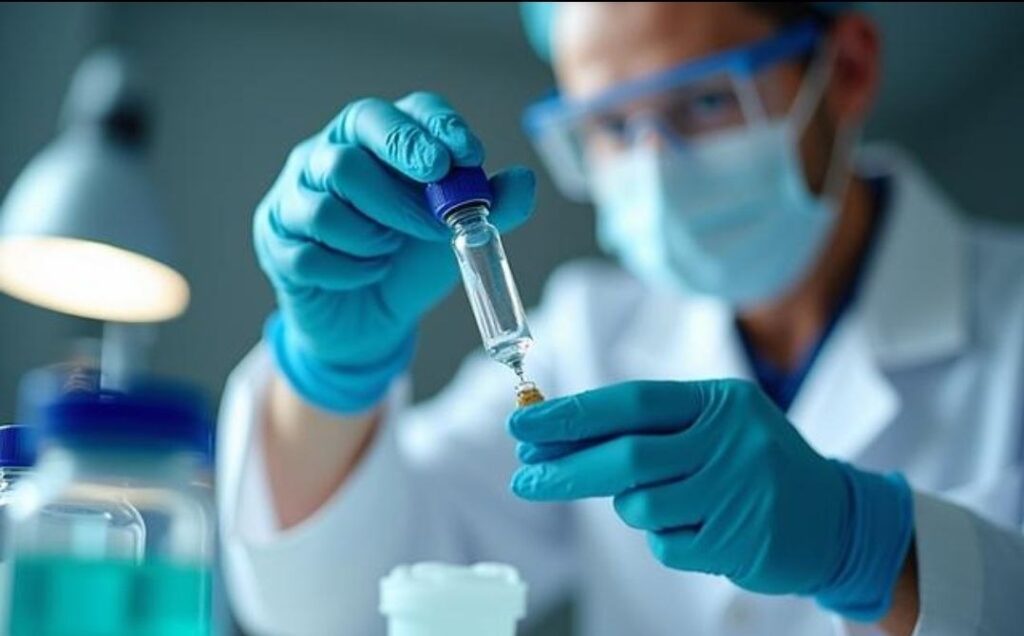
One of the most common misconceptions in peptide handling is the belief that reconstitution simply involves adding water to a lyophilized peptide vial. While this approach may work for some peptide sequences, it often ignores the underlying chemistry that determines whether a peptide dissolves properly, remains stable, and retains its intended biological activity.
Researchers frequently encounter cloudy solutions, visible particles, or complete precipitation after reconstitution. In many cases, the issue is not the peptide itself—it is the mismatch between the peptide’s molecular properties and the solvent being used.
Understanding the physics and chemistry behind peptide solubility can dramatically improve handling practices and reduce unnecessary product loss.
What Happens During Reconstitution?
https://peptideaminonation.com/peptide-reconstitution-guide/
Understanding peptide reconstitution techniques can improve consistency and reliability in peptide preparation. Lyophilized peptides are produced through freeze-drying, leaving behind a highly concentrated peptide matrix. When a solvent is introduced, water molecules must interact with charged and polar regions along the peptide chain.
Successful dissolution depends on several factors:
– Peptide amino acid composition
– Net molecular charge
– Solution pH
– Ionic strength
– Temperature
– Hydrophobicity of the sequence
When these variables are not properly balanced, peptide molecules may interact with each other rather than the solvent, causing aggregation or precipitation.
Why Some Peptides Dissolve Easily While Others Do Not
By following best practice for peptide reconstitution, researchers can improve stability, accuracy, and overall handling procedures.
Not all peptide sequences behave the same way.
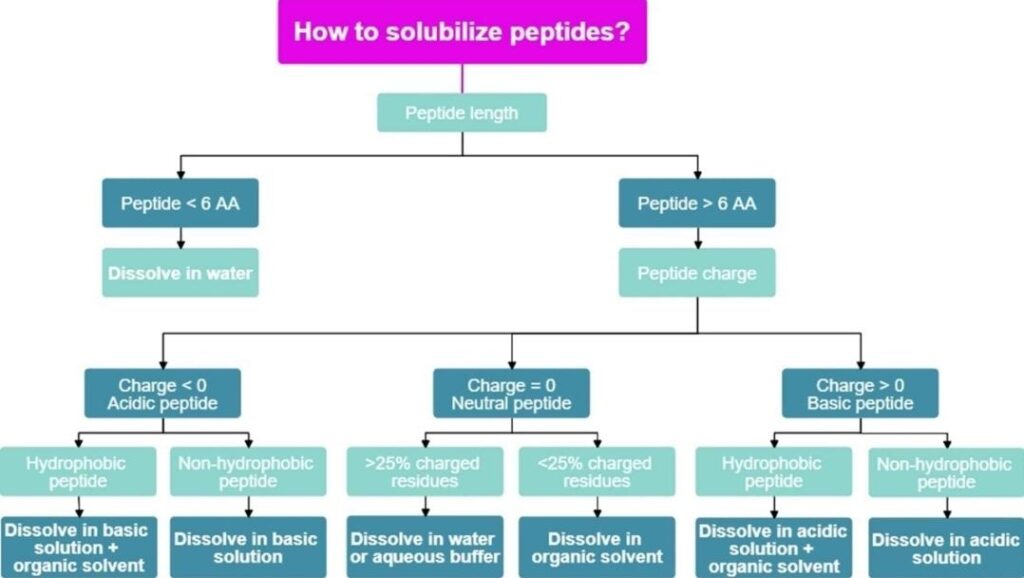
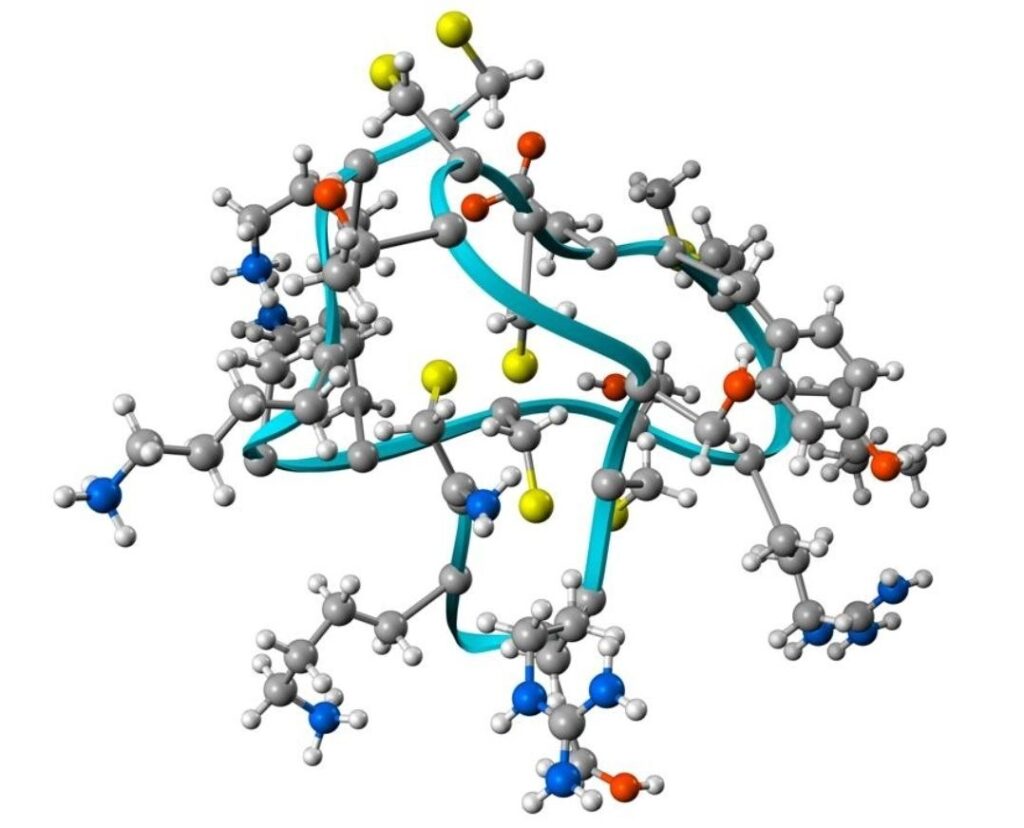
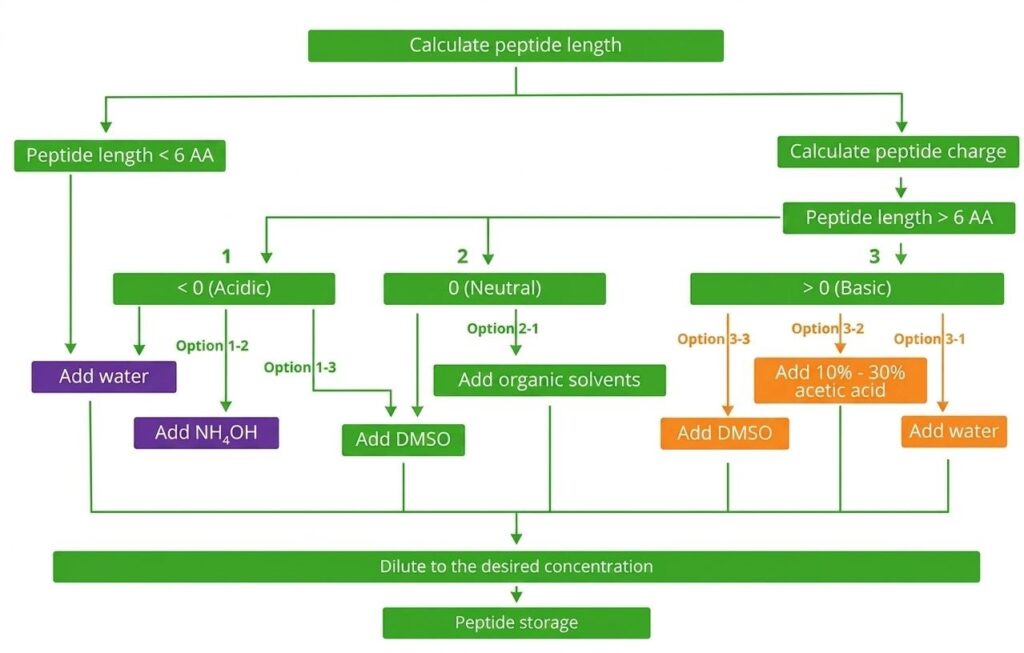
Peptides rich in charged amino acids such as lysine, arginine, glutamic acid, or aspartic acid generally have strong interactions with water molecules. However, the degree of solubility depends heavily on pH.
A peptide’s net charge changes depending on the surrounding environment. When the pH approaches the peptide’s isoelectric point (pI), the molecule carries minimal net charge. At this stage, peptide-peptide interactions increase, and solubility often decreases dramatically.
This is one of the primary reasons researchers may observe cloudiness immediately after adding a solvent.
The Role of pH in Peptide Stability
The pH of a solution does more than affect solubility—it also influences peptide stability.
Basic Peptides
Peptides rich in lysine and arginine may require mildly acidic conditions to enhance solubility. These conditions increase positive charge density and improve molecular dispersion.
Using an inappropriate pH can result in:
– Reduced solubility
– Visible precipitation
– Increased aggregation
– Accelerated degradation
For this reason, experienced researchers rarely rely on a one-size-fits-all solvent strategy.
Why Specialized Buffers Sometimes Outperform Pure Water
Proper peptide reconstitution helps researchers archive accurate concentration and reduce the risk of peptide degradation.
Water is often recommended because it is simple and accessible. However, pure water lacks buffering capacity and can not maintain a stable pH environment.
Specialized buffers help:
– Stabilize pH levels
– Minimize peptide aggregation
– Improve long-term solution stability
– Reduce adsorption to vial surfaces
– Enhance reconstitution consistency
Depending on peptide structure, researchers may utilize buffered aqueous systems designed to maintain conditions that support both solubility and stability.
The ideal solvent system is determined by the peptide’s sequence characteristics rather than a universal rule.
Understanding Cloudiness and Precipitation
Cloudiness after reconstitution is often a warning sign that peptide molecules are self-associating.
Common causes include:
Incorrect pH
The peptide may be near its isoelectric point, reducing its overall charge and increasing aggregation.
Hydrophobic Sequences
Peptides containing large numbers of hydrophobic amino acids naturally resist interaction with water.
Rapid Solvent Addition
Introducing solvent too quickly can create localized concentration gradients that encourage aggregation.
Improper Buffer Selection
A solvent that works perfectly for one peptide may perform poorly with another.
Identifying the root cause requires understanding the peptide’s molecular structure rather than simply adding more solvent.
The Stability-Solubility Tradeoff
A common mistake is focusing exclusively on achieving complete dissolution.
A peptide can appear fully dissolved while still being chemically unstable.
Certain pH conditions may maximize solubility but accelerate degradation pathways such as:
– Deamidation
– Oxidation
– Hydrolysis
The most effective reconstitution strategy balances both solubility and stability to preserve peptide integrity throughout storage and use.
Practical Takeaways for Researchers
Before reconstituting any peptide:
1. Review the amino acid composition.
2. Consider whether the sequence is predominantly acidic or basic.
3. Evaluate the peptide’s likely pI behavior.
4. Select a solvent system compatible with the sequence.
5. Monitor for cloudiness, precipitation, or visible aggregates.
6. Prioritize both solubility and long-term stability.
Peptide reconstitution is not simply a matter of adding water. It is a controlled chemical process influenced by molecular charge, solvent interactions, and environmental conditions.
Researchers who understand these principles can significantly improve consistency, reduce waste, and protect peptide integrity.
Conclusion
The “just add water” approach oversimplifies one of the most important stages of peptide handling. Solubility issues, cloudiness, and precipitation are often symptoms of deeper physicochemical interactions between the peptide and its environment.
By understanding how pH, charge distribution, and buffering systems influence peptide behavior, researchers can make more informed decisions and achieve more reliable results.
For additional educational resources, peptide handling guides, and information on selecting appropriate solvent and buffer pairings based on peptide structure, visit peptideaminonation.com.

Popular Comments
Why Different Peptides Have Different Shelf Lives: 10 Powerful Facts Every Researcher Must Know
[…] Lyophilized vs. Reconstituted Peptides https://peptideaminonation.com/peptide-reconstitution-guide/ […]
How Humidity Affects Lyophilized Peptides: 10 Critical Risks That Can Secretly Destroy Peptide Stability
[…] https://peptideaminonation.com/peptide-reconstitution-guide/ […]
Calculating Peptide Molar Concentration: 7 Easy Steps
[…] https://peptideaminonation.com/peptide-reconstitution-guide/ […]
Freeze-Thaw Peptide Stability: 7 Powerful Reasons Temperature Fluctuations Destroy Peptide Integrity.
[…] https://peptideaminonation.com/peptide-reconstitution-guide/ […]