
Freeze-Thaw Peptide Stability: 7 Powerful Reasons Temperature Fluctuations Destroy Peptide Integrity.

Table of Contents
1. Introduction to Freeze-Thaw Peptide Stability
2. Why Peptides Are Thermodynamically Sensitive
3. The Hidden Problem with Residential No-Frost Freezers
4. Understanding Freeze-Thaw Peptide Stability at the Molecular Level
5. Thermal Cycling and Lyophilized Peptides
6. How Temperature Fluctuations Accelerate Degradation
7. The Kinetics of Peptide Breakdown
8. Best Practices for Maintaining Freeze-Thaw Peptide Stability
9. Common Storage Mistakes
10 Conclusion
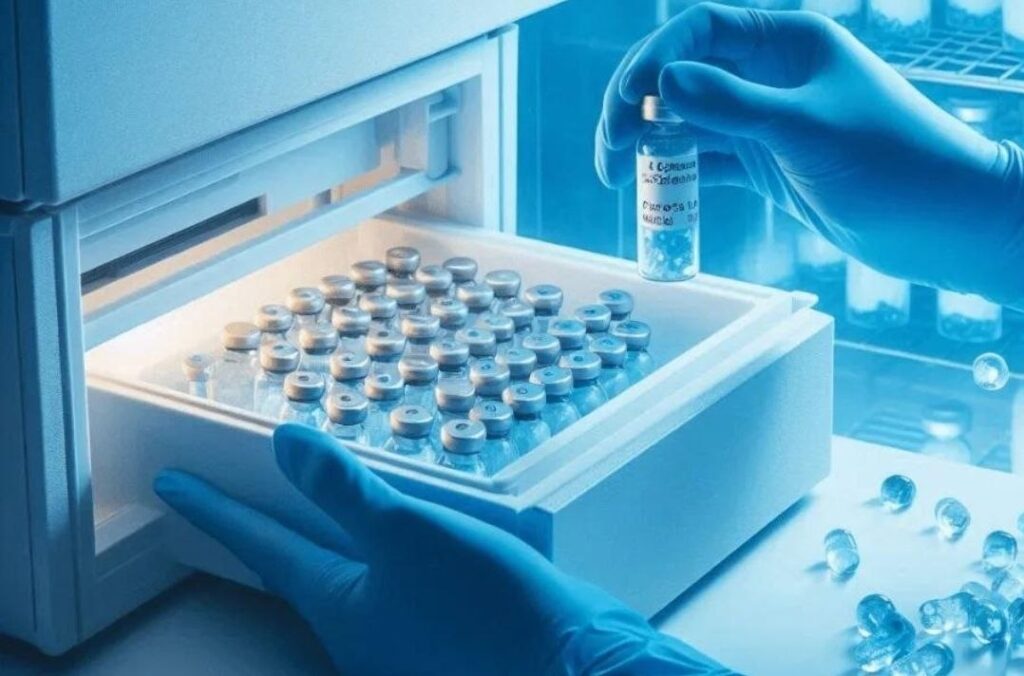
Freeze-Thaw Peptide Stability: Why Storage Condition Matter
https://pubmed.ncbi.nlm.nih.gov
Freeze-thaw peptide stability is one of the most misunderstood aspects of peptide handling. Most researchers know repeated freezing and thawing should be avoided, but few understand the underlying thermodynamics that drive degradation.
The common advice is simple: “Don’t repeatedly freeze and thaw your peptides.”
The scientific reality is far more complex.
Peptides are dynamic molecular structures constantly responding to their environment. Even when stored in a frozen state, microscopic thermal fluctuations can influence molecular interactions, structural stability, and long-term integrity.
Understanding freeze-thaw peptide stability allows researchers to move beyond simplistic storage recommendations and appreciate the molecular science responsible for preserving peptide quality.
Understanding freeze-thaw peptide stability allow researchers to move beyond simplistic storage recommendation and appreciate the molecular science responsible for preserving peptide quality.
Why Peptide Are Thermodynamically sensitive
https://peptideaminonation.com/freeze-thaw-peptide-stability/
Every molecule possesses energy.
Even at extremely low temperatures, molecular motion never completely stops.
According to thermodynamic principles, temperature directly influences molecular energy distribution. As temperature rises, molecular motion increases. As temperature falls, movement slows but does not disappear.
Peptides consist of amino acid chains connected through peptide bonds. These bonds are generally stable, but the overall three-dimensional structure of a peptide remains sensitive to environmental conditions.
Factors influencing peptide stability include:
- Temperature
- Humidity
- pH
- Oxydation
- Light Explosure
- Physical Stress
Amon these variables, temperature often plays the most significant role.
The Hidden Problem with Residential No-Frost Freezers
https://peptideaminonation.com/blog/
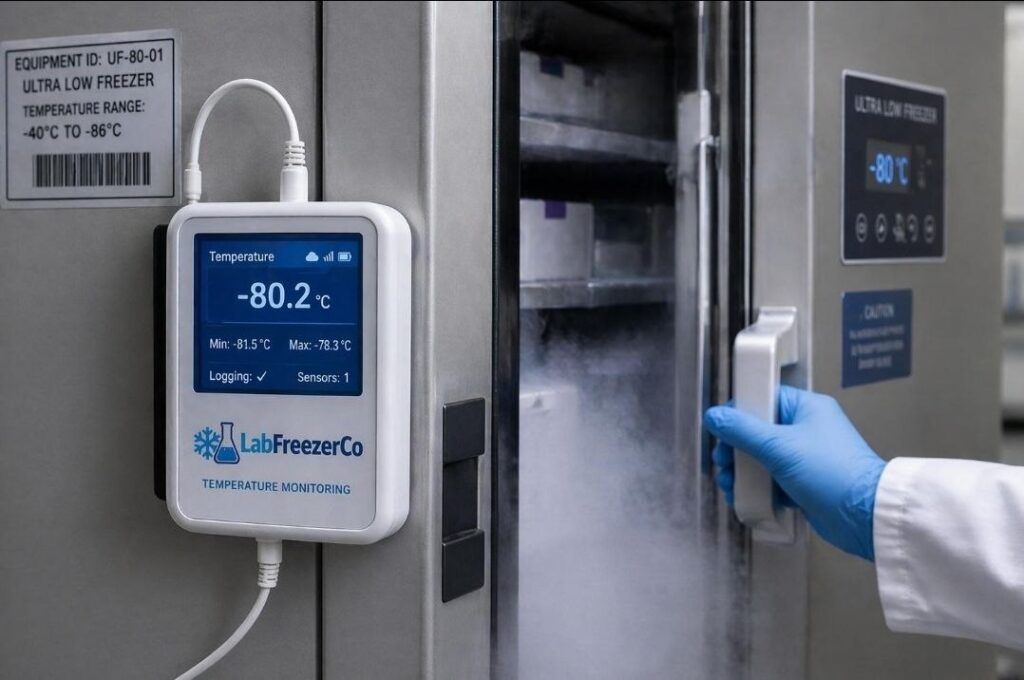
Many researchers assume a freezer maintains a constant temperature.
In reality, most residential freezers operate through temperature cycling.
No-frost systems periodically warm internal components to prevent ice buildup. During these cycles, temperature fluctuations occur throughout the storage chamber.
Although these changes may seem minor, they create repeated thermal stress.
A typical no-frost freezer may alternate between colder and warmer conditions multiple times per day.
From a peptide stability perspective, these fluctuations matter.
Each cycle exposes stored materials to small but measurable changes in molecular energy.
Over weeks or months, these repeated events can contribute to cumulative degradation.
Freeze-Thaw Peptide Stability and Molecular Motion
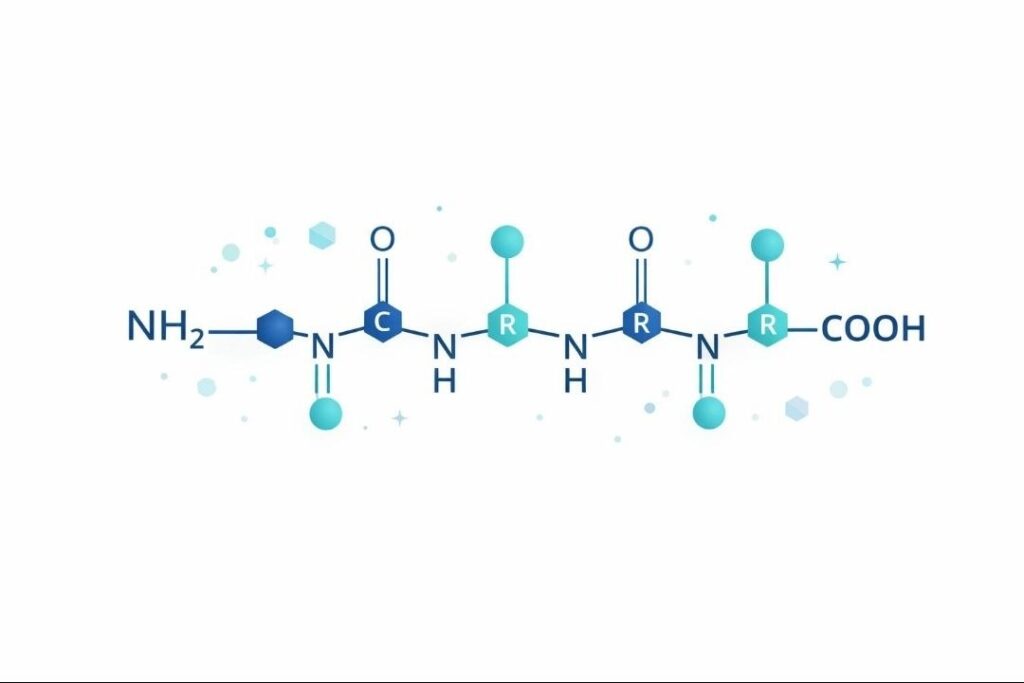
Freeze-thaw peptide stability depends heavily on molecular motion.
When temperature rises even slightly, molecular vibration increases.
This increase can affect:
- Hydrogen bonding networks
- Molecular folding patterns
- Surface interaction
- Residual moisture activity
Lyophilized peptides are particularly sensitive because trace amounts of residual water often remain after freeze-drying.
During temperature fluctuations, this residual moisture can become more chemically active.
The result is a gradual increase in degradation risk
Understanding Glass Transition Temperature
One of the most important concepts in freeze-thaw peptide stability is glass transition temperature.
Lyophilized peptide formulations often exist in a glass-like amorphous state.
Below the glass transition temperature:
- Molecular mobility remains limited.
- Chemical reaction proceed slowly.
- Long-term stability improves.
Above the glass temperature:
- Molecular mobility increase.
- Degradation reaction accelerate.
- Structural integrity becomes less predictable.
Repeated freezer cycling may temporarily move portions of the material closer to this transition zone.
Even brief excursions can contribute to long-term instability.
Thermal Cycling and Lyophilized Peptides
Thermal cycling refers to repeated changes between colder and warmer temperatures.
Each cycle introduces mechanical and chemical stress.
Potential consequences include:
Increased Molecular Mobility
Higher molecular mobility increases the probability of molecular interactions that may contribute to degradation.
Moisture Redistribution
Residual moisture can migrate throughout the lyophilized cake.
This redistribution may create localized environments more favorable to chemical reactions.
Structural Rearrangement
Peptide molecules may gradually reorganize during repeated temperature changes.
This process can alter stability characteristics over time.
Freeze-thaw peptide stability is therefore not simply a matter of reaching a specific storage temperature.
Maintaining temperature consistency is equally important.
The Kinetics Behind Peptide Degradation
Chemical degradation follows kinetic principles.
Reaction rates increase as molecular energy increases.
This relationship is commonly described through the Arrhenius equation, which demonstrates how temperature affects reaction speed.
Small temperature increases may seem insignificant.
However, repeated exposure can compound their effects over time.
Potential degradation pathways include:
Hydrolysis
Hydrolysis occurs when water molecules break peptide bonds.
Residual moisture combined with temperature fluctuations can increase risk.
Oxidation
Certain amino acids remain vulnerable to oxidation.
Temperature cycling may accelerate oxidative reactions.
Aggregation
Peptide molecules can associate with one another, forming aggregates.
Aggregation may reduce solubility and alter molecular behavior.
These mechanisms collectively influence freeze-thaw peptide stability.
Why Repeated Freeze-Thaw Events Are Especially Damaging
https://peptideaminonation.com/blog/
A single freeze-thaw event may have limited impact.
Multiple cycles are a different story.
Each thawing period introduces:
- Increased molecular motion
- Greater moisture activity
- Elevated reaction rates
- Potential aggregation events
Refreezing does not reverse these molecular changes.
Instead, the accumulated effects remain.
This explains why repeated freeze-thaw cycles often produce measurable declines in peptide quality.
Best Practices for Improving Freeze-Thaw Peptide Stability
https://peptideaminonation.com/peptide-reconstitution-guide/
https://pubmed.ncbi.nlm.nih.gov
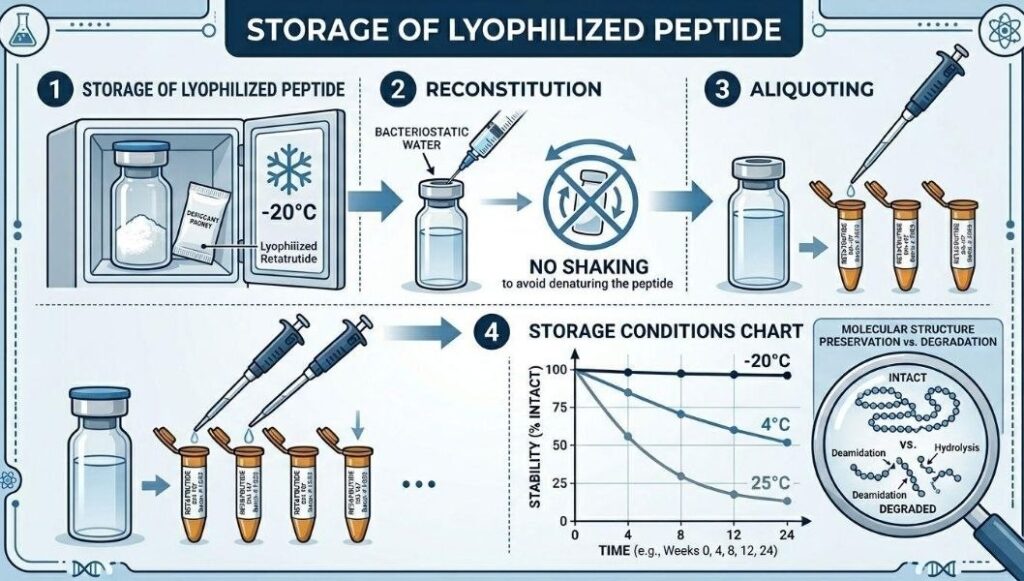
Researchers seeking maximum freeze-thaw peptide stability should consider several practical measures.
Use Dedicated Laboratory Storage
Laboratory freezers generally provide greater temperature consistency than residential appliances.
H3:
Minimize Temperature Exposure
Remove materials only when necessary.
Return them to storage promptly.
Store in Small Aliquots
Aliquoting reduces the need for repeated freeze-thaw events.
Control Moisture Exposure
Protect lyophilized materials from environmental humidity.
Monitor Storage Conditions
Temperature monitoring systems can identify fluctuation before they become problematic
Common Storage Mistakes That Reduce Freeze-Thaw Peptide Stability
https://peptideaminonation.com/freeze-thaw-peptide-stability/
Several mistakes appear repeatedly across research environments.
Frequent Door Opening
Opening freezer doors introduces warm air and temperature variation.
Storage Near Door Compartments
Door locations experience the greatest fluctuations.
Long-Term Use of Household Freezers
Residential no-frost systems prioritize convenience rather than molecular preservation.
Repeated Reconstitution and Refreezing
Repeated handling increases degradation opportunities.
Avoiding these practices can significantly improve freeze-thaw peptide stability.
Conclusion
Freeze-thaw peptide stability involves far more than a simple recommendation to avoid thawing and refreezing.
Temperature influences molecular motion, residual moisture activity, reaction kinetics, and long-term structural integrity.
The hidden challenge lies in repeated thermal fluctuations, particularly those generated by residential no-frost freezer systems.
Understanding the thermodynamics behind peptide storage transforms a basic rule into a scientific framework for preserving molecular quality.
Researchers who appreciate the relationship between temperature, kinetic energy, and degradation pathways can make more informed decisions regarding peptide handling and storage.
For additional educational resources covering peptide stability, peptide handling, reconstitution science, and advanced storage considerations, explore the technical guides available at peptideaminonation.com.
