10 Powerful Signs of a Reliable Peptide Research Report: Avoid Costly Scientific Mistakes

Table of Contents
1.What Is a Reliable Research Report?
2. Why Reliable Research Reports Matter
3. The Dangerous Mistake of Focusing Only on Purity Percentage
4.Reliable Research Report Standards: Independent Testing
5. Why Transparency Is More Important Than Perfect Numbers
6. How to Evaluate HPLC Chromatograms
7. Why Mass Spectrometry Data Matters
8. Not All Laboratories Follow the Same Standards
9. Common Differences Between Laboratory Reports
10. Reliability Depends on Consistency, Not a Single Test
11. The Importance of Batch-to-Batch Consistency
12. Understanding the Limits of Testing Methods
13. Reconstitution Errors and Research Accuracy
14 Community Verification and Scientific Confidence
15.Red Flags of an Unreliable Research Report
16. Reliable Research Report Evaluation Checklist
17 Conclusion

Powerful Signs of a Reliable Peptide Research Report: What Makes Scientific Data Truly Trustworthy?
A Reliable Research Report is one of the most important tools for making informed decisions in scientific research, peptide research, biotechnology, supplement testing, and laboratory analysis.
Unfortunately, many researchers place too much trust in a Certificate of Analysis (CoA) without carefully examining the data behind it. Others focus exclusively on purity percentages while ignoring critical information such as HPLC chromatograms, mass spectrometry results, testing methodology, and batch consistency.
After reviewing numerous Certificates of Analysis, HPLC chromatograms, and mass spectrometry reports, I have found that trustworthy research reports are rarely defined by a single impressive number. Instead, reliability comes from transparency, reproducibility, independent verification, and complete supporting data.
This guide explains exactly what makes a research report reliable and how to evaluate scientific data like a professional.
What Is a Reliable Peptide Research Report?
A Reliable Peptide Research Report is a document that presents scientific findings using transparent methods, accurate testing procedures, reproducible results, and verifiable evidence.
Reliable reports allow researchers to:
•Verify product identity
•Assess purity and quality
•Detect contaminants
•Confirm consistency
•Reproduce findings
•Make evidence-based decisions
A report should do more than provide results. It should demonstrate how those results were obtained.
Why Reliable Peptide Research Reports Matter
https://peptideaminonation.com/how-to-read-a-peptide-coa-10-critical-things-to-learn/
Research is only as trustworthy as the evidence supporting it.
When data is incomplete or misleading, researchers risk:
•Drawing incorrect conclusions
•Wasting valuable resources
•Repeating flawed experiments
•Purchasing low-quality materials
•Publishing inaccurate findings
A reliable report helps eliminate uncertainty and improves confidence in scientific decisions.
The Dangerous /Mistake of Focusing Only on Purity Percentage
One of the most common mistakes researchers make is assuming that purity percentage alone determines quality.
For example, many people automatically believe a peptide with 99% purity is superior to one with 97% purity.
However, purity percentages reveal only part of the story.
They do not automatically confirm:
•Correct molecular identity
•Accurate testing procedures
•Laboratory credibility
•Impurity composition
•Batch consistency
•Sample stability
A single purity number without supporting evidence can be misleading.
Reliable Peptide Research Report Standards: Independent Testing
Independent testing is one of the strongest indicators of reliability:
Vendor-supplied reports can provide useful information, but they should not be accepted without verification whenever possible.
Independent laboratories help reduce conflicts of interest and provide additional confidence in reported results.
Why Independent Testing Matters
Independent testing can:
•Verify vendor claims
•Confirm product identity
•Detect hidden impurities
•Increase transparency
•Improve confidence in data
The most reliable peptide reports often include third-party verification alongside internal quality control measures
Why Transparency Is More Important Than Perfect Numbers
Many researchers become impressed by exceptionally high purity values.
However, transparency is often a better indicator of reliability.
A trustworthy report clearly discloses:
•Testing methods
•Laboratory information
•Sample preparation procedures
•Instrumentation
•Detection limits
•Batch numbers
•Testing dates
Perfect-looking numbers are meaningless if the underlying data can not be verified.
How to Evaluate HPLC Chromatograms
https://peptideaminonation.com/how-to-read-a-peptide-coa-10-critical-things-to-learn/
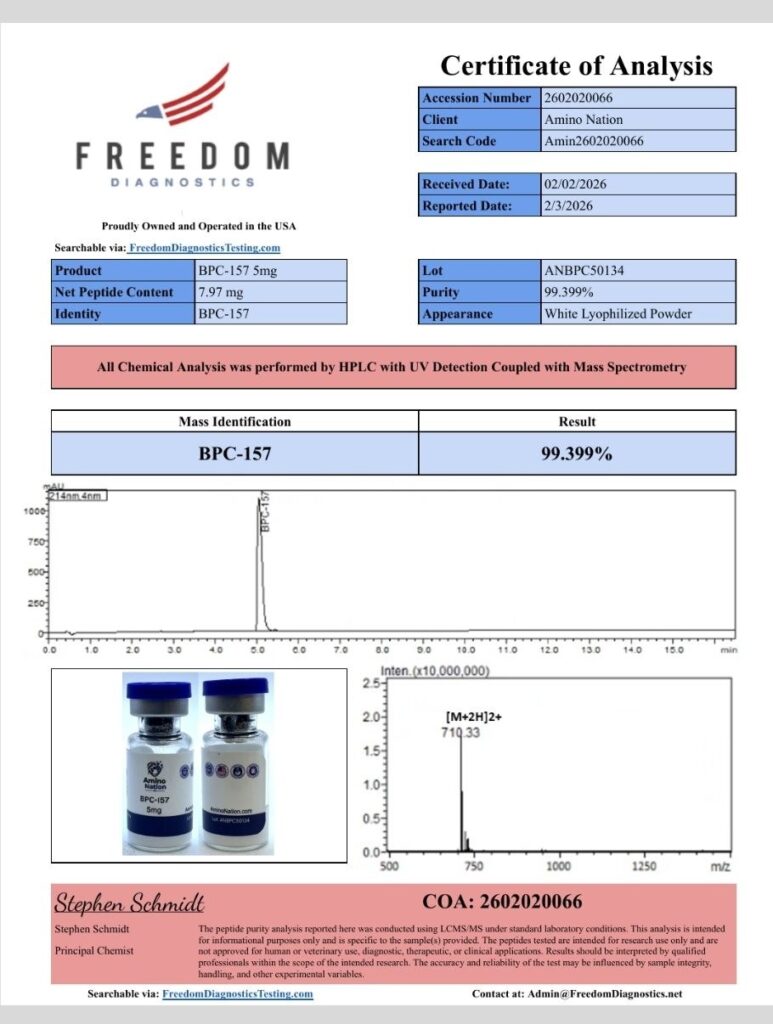
Reliable Peptide Research Report Analysis Starts with HPLC Data
High-Performance Liquid Chromatography (HPLC) is one of the most valuable tools for evaluating quality.
Unfortunately, many researchers ignore chromatograms entirely.
This can be a costly mistake.
Peak Shape
Well-defined peaks generally indicate better analytical quality.
Poor peak shape may suggest testing issues or sample problems.
Peak Purity
Additional peaks often indicate impurities, degradation products, or unwanted compounds.
Baseline Quality.
Excessive noise may reduce confidence in the results.
Retention Time Consistency
Unexpected shifts in retention time may indicate variations in testing conditions or sample composition.
In many cases, the chromatogram provides more useful information than the purity percentage itself.
Why Mass Spectrometry Data Matters
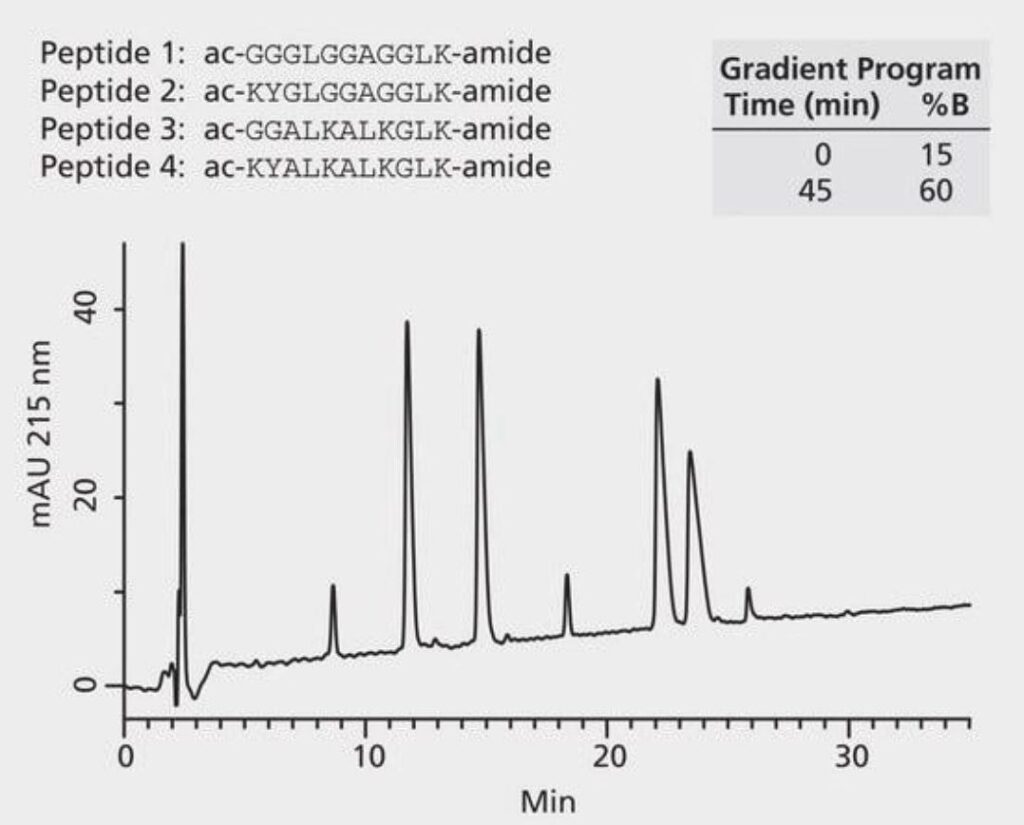
Reliable Peptide Research Report Verification Requires Identity Testing
A sample can appear highly pure on HPLC while still being the wrong compound
This is where mass spectrometry becomes essential.
Mass spectrometry helps confirm:
•Molecular identity
•Molecular weight
•Sample authenticity
•Structural consistency
HPLC and mass spectrometry should be viewed as complementary techniques rather than competing methods.
Together, they provide a much clearer picture of quality.

Not All Laboratories Follow the Same Standards
One overlooked fact is that laboratories vary significantly in quality.
During comparisons of reports from different laboratories analyzing similar samples, several differences became apparent.
These differences included:
•Reporting quality
•Chromatogram detail
•Impurity detection sensitivity
•Data presentation
•Method validation procedures
A laboratory’s reputation and quality standards can significantly influence the reliability of its findings.
Common Differences Between Laboratory Reports
Purity Results Often Differ Slightly
Small differences between laboratories are normal.
Variations can occur because of:
•Instrument sensitivity
•Calibration procedures
•Sample preparation
•Analytical methods
Chromatogram Quality Varies Widely
Some laboratories provide detailed chromatograms with complete annotations.
Others provide only summarized results.
Mass Spectrometry Interpretation May Differ
Analysts may interpret complex spectra differently depending on experience and methodology.
Detection of Minor Impurities Varies
More advanced equipment can often identify impurities that less sensitive instruments may miss.
Reporting Standards Are Not Consistent
Some laboratories provide extensive documentation.
Others provide only minimal information.
Reliable Peptide Research Report Reliability Depends on Consistency, Not a Single Test
One insight often missing from online discussions is that a report is only a snapshot in time.
A single excellent result does not automatically guarantee long-term quality.
Reliable organizations demonstrate:
•Consistent testing
•Repeatable results
•Stable manufacturing processes
•Reliable documentation
Consistency across multiple batches is often more valuable than one impressive report.
The Importance of Batch-to-Batch Consistency
Batch consistency is one of the strongest indicators of quality control.
A reliable report should include:
•Batch number
•Manufacturing information
•Testing date
•Traceability data
When multiple batches show similar results over time, confidence in the product increases substantially.
Understanding the Limits of Testing Methods
Reliable Peptide Research Report Evaluation Requires Understanding Limitations
Every testing method has limitations.
HPLC cannot reveal everything.
Mass spectrometry cannot detect every possible issue.
No analytical technique is perfect.
Reliable reports acknowledge these limitations rather than presenting results as absolute truth.
The best reports combine multiple testing methods to provide a more complete evaluation.
Reconstitution Errors and Research Accuracy
https://peptideaminonation.com/peptide-reconstitution-measurement-errors/
Researchers often overlook how sample preparation affects results.
Improper reconstitution can cause:
•Concentration errors
•Reduced stability
•Peptide degradation
•Misleading outcomes
Even excellent laboratory data can become less useful if the sample is mishandled after testing.
Storage and preparation practices should always be considered alongside laboratory findings.
Community Verification and Scientific Confidence
Community verification is another factor that is often ignored.
While anecdotal reports should never replace scientific evidence, they can reveal patterns that deserve further investigation.
Researchers can benefit from:
•Comparing findings
•Discussing reproducibility
•Identifying recurring issues
•Verifying consistency across batches
Scientific confidence increases when independent observations support laboratory data.
Red Flags of an Unreliable Peptide Research Report
https://pubmed.ncbi.nlm.nih.gov/
Watch for these warning signs:
•Missing HPLC chromatograms
•Missing mass spectrometry data
•No batch identification
•No testing methodology
•Missing laboratory information
•Lack of transparency
•Incomplete documentation
•Unverifiable claims
•Excessive marketing language
•Results that appear unrealistically perfect
These red flags do not automatically prove a report is inaccurate, but they should encourage further investigation.
Reliable Peptide Research Report Evaluation Checklist
Before trusting any report, ask these questions:
✔ Was independent testing performed?
✔ Is the testing methodology clearly explained?
✔ Are HPLC chromatograms included?
✔ Is mass spectrometry data available?
✔ Can the findings be reproduced?
✔ Is batch information provided?
✔ Are testing limitations disclosed?
✔ Is raw data available?
✔ Does the laboratory follow recognized standards?
✔ Can the results be independently verified?
If several answers are “no,” additional scrutiny may be necessary.
Conclusion
A Reliable Research Report is not defined by a perfect purity percentage or an attractive Certificate of Analysis.
Reliability comes from transparency, independent verification, reproducibility, quality methodology, and complete supporting data.
Researchers who learn to evaluate HPLC chromatograms, interpret mass spectrometry results, verify laboratory standards, and recognize analytical limitations are better equipped to distinguish trustworthy evidence from questionable claims.
The goal is not simply to find impressive numbers.
The goal is to determine whether the evidence behind those numbers can genuinely be trusted.
