
Description
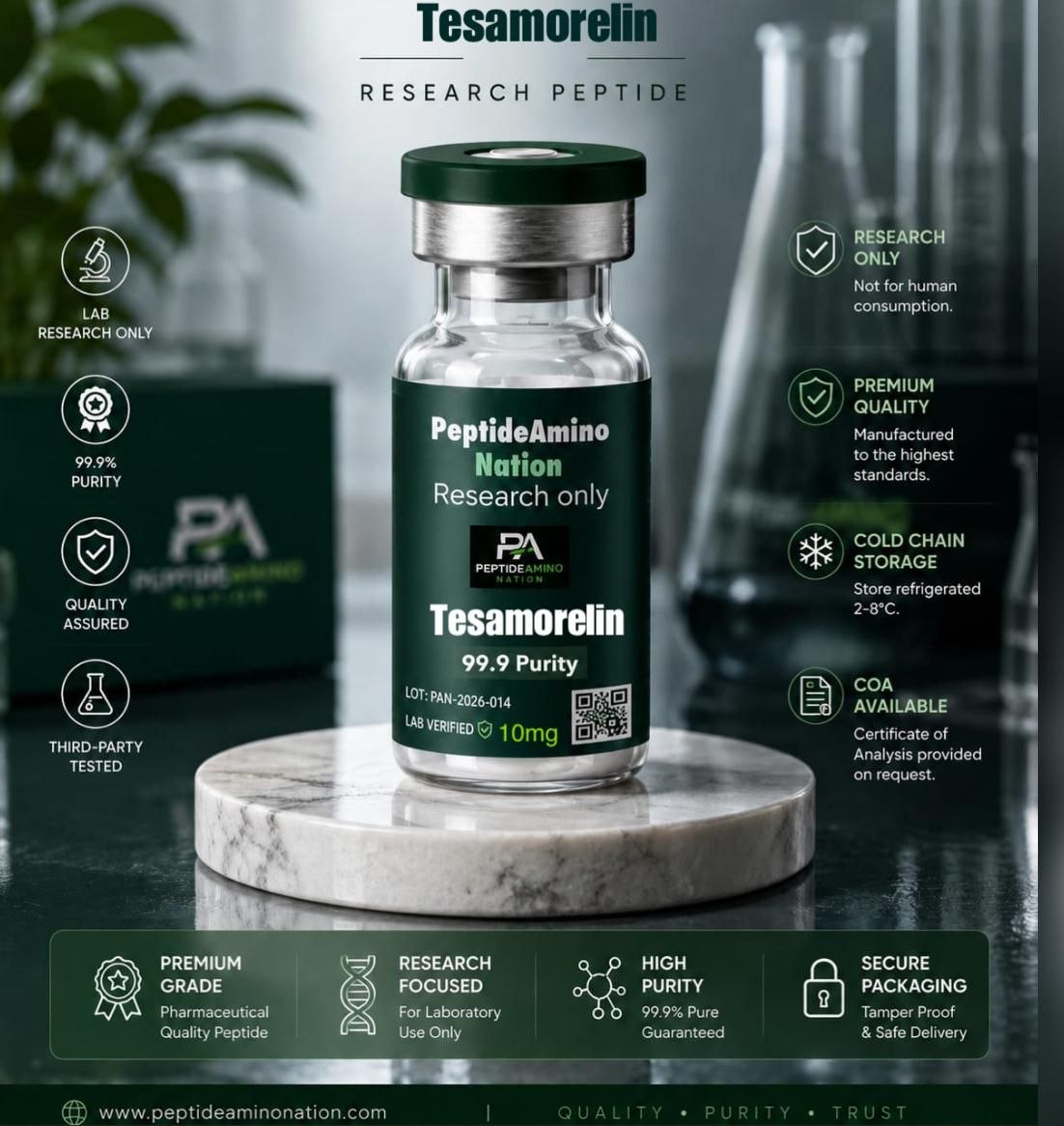
Tesamorelin is a synthetic Growth Hormone Releasing Hormone (GHRH) analog widely studied in scientific and laboratory research for its ability to stimulate endogenous growth hormone secretion. Engineered to mimic naturally occurring GHRH while providing enhanced stability, Tesamorelin has become an important research compound in studies involving endocrine regulation, metabolic pathways, body composition, and growth hormone physiology.
Researchers continue to investigate Tesamorelin for its influence on growth hormone signaling, insulin-like growth factor-1 (IGF-1) expression, metabolic activity, and cellular maintenance mechanisms.
For Research Use Only. Not for Human Consumption, Medical Use, or Veterinary Use.
Key Features
✔ Premium Research-Grade Peptide
✔ High Purity (≥99% HPLC Tested)
✔ Synthetic GHRH Analog
✔ Growth Hormone Secretion Research
✔ IGF-1 Pathway Investigation
✔ Laboratory-Tested Quality Assurance
✔ Secure Lyophilized Packaging
✔ Suitable for Advanced Scientific Studies
Product Specifications
| Specification | Details |
|---|---|
| Product Name | Tesamorelin |
| Peptide Type | GHRH Analog |
| Purity | ≥99% (HPLC Verified) |
| Appearance | White Lyophilized Powder |
| Molecular Formula | C₂₂₁H₃₆₆N₇₂O₆₇S |
| Molecular Weight | 5135.9 g/mol |
| Storage | Refrigerate at 2°C–8°C |
| Intended Use | Laboratory Research Only |
Scientific Background
Tesamorelin is a stabilized synthetic analog of Growth Hormone Releasing Hormone designed to promote endogenous growth hormone release through activation of GHRH receptors. Its structural modifications enhance resistance to enzymatic degradation, allowing researchers to investigate prolonged growth hormone signaling responses.
Because of its mechanism of action, Tesamorelin has become a valuable research tool in studies exploring:
- Growth hormone regulation
- IGF-1 production and signaling
- Metabolic function
- Fat metabolism pathways
- Endocrine system physiology
- Recovery and regenerative processes
- Healthy aging research
- Cellular maintenance mechanisms
Scientific interest in Tesamorelin continues to grow due to its role in understanding hormone-mediated physiological processes.
Areas of Research Interest
Growth Hormone Regulation Studies
Researchers utilize Tesamorelin to investigate natural growth hormone release patterns and endocrine system responses following GHRH receptor activation.
IGF-1 Expression Research
Tesamorelin is frequently studied for its relationship with insulin-like growth factor-1 (IGF-1), a key component involved in growth, repair, and metabolic signaling pathways.
Metabolic Function Research
Laboratory investigations often focus on how growth hormone pathways influence energy utilization, nutrient partitioning, and metabolic regulation.
Adipose Tissue Research
Scientists have explored Tesamorelin in studies evaluating hormone-mediated effects on adipose tissue metabolism and body composition dynamics.
Recovery and Regenerative Mechanisms
Research models frequently examine how growth hormone and IGF-1 pathways may contribute to tissue maintenance, recovery, and regenerative biological processes.
Healthy Aging Investigations
Tesamorelin remains a compound of interest for researchers studying age-related endocrine changes and hormonal regulation throughout the lifespan.
Why Researchers Choose Tesamorelin
At PeptideAmino Nation, we understand that scientific research requires dependable materials, exceptional purity, and rigorous quality standards.
Our Tesamorelin is manufactured under strict quality control procedures to help ensure consistency, reliability, and reproducibility in laboratory applications.
Benefits of Choosing Our Tesamorelin
- Research-Grade Purity Standards
- Comprehensive Quality Testing
- Consistent Batch-to-Batch Reliability
- Secure Lyophilized Packaging
- Professional Research Support
- Reliable Product Integrity
- Fast and Secure Shipping
Storage Instructions
To preserve peptide quality and stability:
- Store refrigerated at 2°C–8°C.
- Protect from direct sunlight and excessive moisture.
- Keep vial tightly sealed when not in use.
- Follow established laboratory handling procedures.
Proper storage conditions help maintain peptide integrity throughout research applications.
Quality Assurance
Each batch of Tesamorelin undergoes extensive quality verification procedures, which may include:
- High-Performance Liquid Chromatography (HPLC) Testing
- Purity Analysis
- Identity Verification
- Batch Consistency Evaluation
- Manufacturing Quality Review
These measures help ensure researchers receive dependable materials suitable for advanced scientific investigation.
Research Applications
Researchers may utilize Tesamorelin in studies related to:
- Growth Hormone Physiology
- Endocrine Function
- IGF-1 Regulation
- Metabolic Signaling
- Adipose Tissue Research
- Recovery Mechanisms
- Cellular Maintenance
- Longevity Research
- Peptide Pharmacology
Frequently Asked Questions
What is Tesamorelin?
Tesamorelin is a synthetic Growth Hormone Releasing Hormone (GHRH) analog designed for scientific research involving growth hormone and IGF-1 pathways.
What is Tesamorelin commonly studied for?
Researchers commonly investigate Tesamorelin for growth hormone secretion, endocrine regulation, metabolic function, adipose tissue metabolism, and healthy aging studies.
Is this product intended for human use?
No. Tesamorelin sold by PeptideAmino Nation is strictly intended for laboratory research purposes only.
How should Tesamorelin be stored?
Store refrigerated between 2°C and 8°C in a dry environment protected from direct light exposure.
Why choose PeptideAmino Nation?
PeptideAmino Nation provides high-purity research peptides supported by rigorous quality control, reliable sourcing, secure packaging, and professional customer support.
Important Disclaimer
Tesamorelin is sold strictly for laboratory research purposes only.
This product is not intended to diagnose, treat, cure, or prevent any disease and is not approved for human or veterinary use. Purchasers are responsible for ensuring compliance with all applicable laws, regulations, and laboratory research standards.
Reviews
There are no reviews yet.